Questions? Reach a real person:

12-module behavior science protocol

Stop the barking and lunging. Get your walks back.

The Calm Walk Method is a 12-lesson, reward-based reactivity reset — built on the same peer-reviewed science used by certified behaviorists. Map your dog's triggers, rebuild calm under threshold, and walk a dog who looks to you instead of losing it.

12 audio lessons · ~8 min each · instant access

$5 $50

Yes — get instant access for $5 →

🔒 30-day money-back guarantee · Full refund, no questions asked · Instant access

✓ Positive reinforcement only✓ Force-free · No shock collars✓ 47+ peer-reviewed studies✓ AVSAB-aligned methods

If you hold your breath every time you see another dog coming down the street — scanning ahead, calculating distances, pulling your dog off the path before the lunge — you are not a bad owner, and your dog is not a bad dog. Leash reactivity is a stress response, not a character flaw. But it won't get better on its own, and the usual advice (tighten the leash, say 'no', use a prong collar) actively makes it worse. Here's what actually works.

Video testimonial

Watch: A reactive dog's first calm walk

Every morning you walk out that door knowing it's going to happen. Your dog is fine — sniffing the grass, relaxed on the leash — until they're not. The other dog appears and something switches. The lunge. The bark. The spin. Sixty pounds of muscle hitting the end of the leash while your shoulder screams and the whole street turns to look. Your dog has "turned into a lunatic on the leash" again, and you're the one apologizing.

Walks used to be the good part of the day. Now you dread them.

You've probably tried correcting it. Maybe you've yanked the leash. Said "no" firmly. Used a prong collar because someone on the internet said it worked for them. And it either did nothing, or it made things worse.

Here's what no one told you: leash reactivity is a stress response, not a decision. Your dog isn't "being dominant" or "acting out." Their nervous system is flooded — salivary cortisol spikes measurably in dogs during aversive training events (Macchi et al., 2026; Vieira de Castro et al., 2020). They're reacting the way you'd react if something terrifying appeared at the end of a rope you're tied to — you'd panic too.

Yanking that rope doesn't fix the fear. It adds pain to a system that is already overwhelmed.

Why the leash makes it worse — and why that's actually good news

A loose dog who sees something scary has options: circle wide, sniff the ground, walk away, put distance between himself and the thing. A leashed dog has none of those. He's bolted to your side with the trigger coming closer and no way to escape. So his body picks the only strategy left: get big, get loud, make the scary thing go away.

And here's the cruel part — it works. The other dog passes by. The jogger keeps going. From your dog's point of view, the lunging is what kept him safe. Every walk where that happens is a rehearsal that wires the response deeper. That's the bad news.

The good news is the flip side of the same coin: because the behavior is learned, it can be un-learned. You don't need a different dog. You need to change what the trigger means and give your dog a better option than exploding. That's a teachable skill, and it's the whole of this program.

What the science says — and why it changes everything

Peer-reviewed research is consistent: punishing a fear response makes the underlying fear worse (Guilherme Fernandes, Olsson & Vieira de Castro, 2017). Aversive tools suppress the barking and lunging while the emotional state gets more negative. You see a quieter dog for a moment. You've trained an angrier nervous system underneath. Dogs whose owners use multiple aversive methods are measurably more pessimistic — their whole emotional baseline shifts toward threat (Casey et al., 2021).

Vieira de Castro et al. (2020) found dogs trained with aversive methods showed significantly more stress behaviours and a more pessimistic cognitive bias than reward-based trained dogs. China et al. (2020) found e-collar training offered no advantage over positive reinforcement — and produced worse welfare outcomes.

This matters because it tells you what actually works: change what your dog feels about the trigger, not just suppress what they do when they see one.

$150/hr

A certified behaviorist charges roughly $100–$200 an hour to run the exact threshold-and-counterconditioning protocol in this program — and reactivity is never one session. You're getting the same method, laid out step by step, for the price of a coffee.

— Private behavior consults typically run $100–$200/session (industry pricing, 2026)

The Calm Walk Method: rebuilding the emotion, one rep at a time

Leash reactivity responds to threshold work + counterconditioning. You find the distance where your dog can see the trigger and still take a treat — that's threshold. You run controlled exposures there, pairing the trigger with something your dog loves. Over reps, the trigger starts to predict good things instead of a threat response.

The skill is in the mechanics: finding threshold accurately, reading early stress signals before the dog tips over, timing the marker correctly, knowing when to increase the challenge and when to add distance. That's what the 12 lessons teach, in the exact order you need them.

Lesson 7 alone — trigger stacking and recovery windows — is worth the price of the program for most owners. Understanding that your dog's cortisol from Monday's walk is still influencing Thursday's changes everything about how you manage bad days (Starling et al., 2013; Cocco et al., 2025).

The 30-day roadmap in lesson 12 gives you the day-by-day plan — what walks to do, what counts as a successful session, and how to measure real progress.
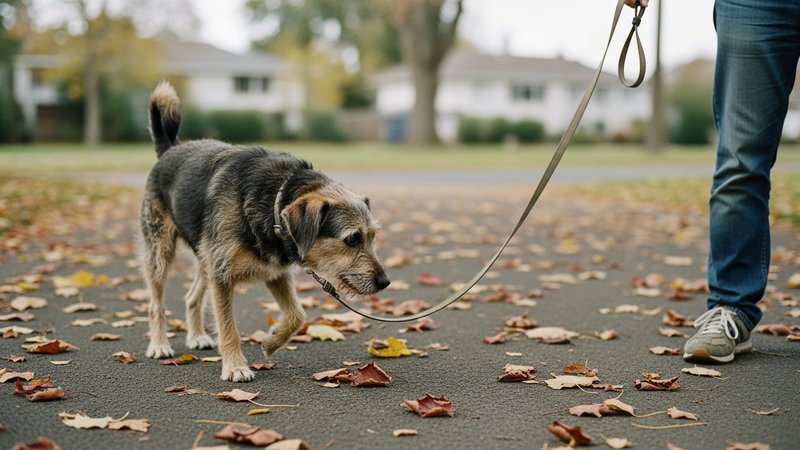
A calm dog walking on a loose leash beside its owner
The goal of the Calm Walk Method: a loose leash, a soft body, and a dog who checks in with you when the world shows up.

What you'll actually be able to do by the end

This isn't theory you file away. By the time you finish the twelve lessons, here's the walk you'll be running:

What the reactivity is quietly costing you

Be honest about the walk you take now. You go out at 6am or 10pm, the dead hours, because that's when the street is empty. You cross to the other side when you see a leash coming. You've got a mental map of every blind corner and parked van on the route. You've stopped taking your dog to the places you both used to love because you can't trust what happens when the world shows up.

That's not a training problem any more. That's your dog's whole life getting smaller — and yours with it. Every reactive episode is also a rep. Every lunge that "works" (the other dog goes away, because they always do) teaches your dog that lunging is the strategy that keeps them safe. Left alone, reactivity doesn't plateau. It rehearses. It gets more efficient. The window where it's easiest to change is the one you're standing in right now.

Why this isn't "everything you already tried"

When someone says "I've tried everything and nothing worked," what they almost always mean is they tried corrections — the leash pop, the stern "no", the spray bottle, the prong, the e-collar. Look at the chart again. Those aren't a different flavour of the same thing as the Calm Walk Method. They're the exact methods the research links to more stress and more aggression in reactive dogs (Schalke et al., 2007; Arhant et al., 2010). Polsky (2000) documented cases where electronic containment collars triggered unprovoked aggression — and Beerda et al. (1998) measured the stress cascade directly: elevated cortisol, increased heart rate, and behavioral shutdown.

The Calm Walk Method works from the opposite direction. Instead of adding a consequence on top of a flooded nervous system, it lowers the intensity until your dog can think again, then deliberately changes what the trigger predicts. Vieira de Castro et al. (2021) confirmed in a controlled trial that reward-only training produces the same learning outcomes as mixed methods — without the welfare cost. Engage–disengage. Counterconditioning. BAT long-line choice work. The same protocols certified behaviorists charge $150 an hour to run — laid out in twelve short lessons you can start on your next walk. If "everything" never included this, then you haven't actually tried everything yet.

Why you're getting 12 lessons for $5

We price the Calm Walk Method as an introduction because we know it works. If it helps your dog — and for the vast majority of reactive dogs it does — you'll trust us with the rest. Some owners get Home Alone or Speak Dog for the next problem they want to tackle. Some get The Good Dog Vault and work through everything at once.

But most people just want their walks back. This does that.

Not sure where your dog sits on the reactivity scale? Take the free 60-second quiz first — it maps your dog's stage and points you to the right starting lesson.
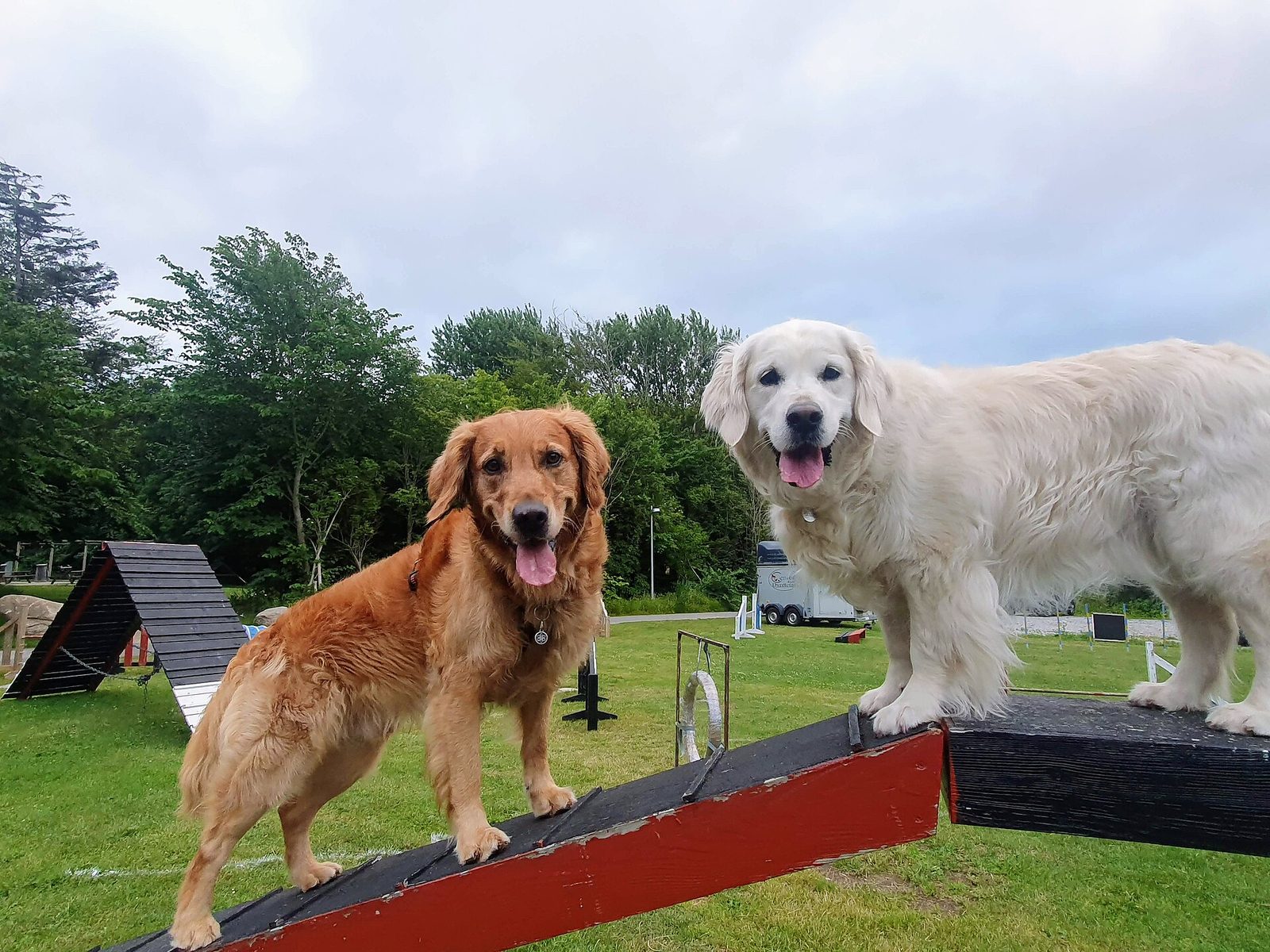

Reward-based training in action
Every lesson is built on reward-based methods — the same peer-reviewed science cited throughout this page.

What owners say

Real before & after — from Pup Class owners

Before

Koda lunged at every dog, person, and bike on our street. Walks were a 20-minute anxiety event I dreaded.

After

Six weeks of threshold work and she checks in with me instead of exploding. We pass dogs at 15 feet now. That felt impossible.

Before

Three trainers, two prong collars, zero improvement — just a more anxious dog who kept getting worse.

After

The lesson on trigger stacking changed everything. Understanding WHY he reacted on some days and not others let me set him up to succeed.

Results vary. Every dog and situation is different.

See the transformation

Video testimonial

Watch: The Calm Walk transformation

Ready to start today?

30-day money-back guarantee. If it's not for you, email us — full refund, no questions asked.

Yes — get instant access for $5 →

Instant access · 12 audio lessons · ~8 min each · instant access

Peer-reviewed evidence

What the peer-reviewed research says about reactivity

Research cited from:PLOS ONEFrontiers in Veterinary ScienceJournal of Veterinary BehaviorApplied Animal Behaviour ScienceScientific ReportsAnimal WelfareJournal of Applied Animal Welfare SciencePhysiology & BehaviorVeterinary RecordJournal of Experimental PsychologyAnimals

Dogs trained with aversive tools show significantly more stress-related behaviour and a more pessimistic emotional state than reward-based trained dogs — the opposite of what an already-reactive dog needs.

— Vieira de Castro, A.C., et al. (2020). Does training method matter? Evidence for the negative impact of aversive-based methods on companion dog welfare. PLOS ONE, 15(12), e0225023.

Confrontational techniques — alpha rolls, staring a dog down, growling at it, forcing items from its mouth — elicited an aggressive response from at least a quarter of the dogs they were used on. Punishing a reactive dog makes the explosion more likely, not less.

— Herron, M.E., Shofer, F.S., & Reisner, I.R. (2009). Survey of the use and outcome of confrontational and non-confrontational training methods in client-owned dogs showing undesired behaviors. Applied Animal Behaviour Science, 117(1–2), 47–54.

In a large survey of dog owners, training that relied on punishment and negative reinforcement was associated with a higher incidence of problem behaviours; reward-based training was associated with fewer.

— Blackwell, E.J., Twells, C., Seawright, A., & Casey, R.A. (2008). The relationship between training methods and the occurrence of behavior problems, as reported by owners, in a population of domestic dogs. Journal of Veterinary Behavior, 3(5), 207–217.

Dogs trained with negative reinforcement displayed more stress signals and looked to their owners less often — the broken trust that keeps a reactive dog over threshold.

— Deldalle, S., & Gaunet, F. (2014). Effects of 2 training methods on stress-related behaviors of the dog (Canis familiaris) and on the dog–owner relationship. Journal of Veterinary Behavior, 9(2), 58–65.

Positive reinforcement training produces better obedience outcomes, fewer problem behaviours, and lower welfare risks than aversive methods — no legitimate advantage to punishment-based approaches, only costs.

— Ziv, G. (2017). The effects of using aversive training methods in dogs — A review. Journal of Veterinary Behavior, 19, 50–60.

Electronic-collar training was not more effective than reward-based training for leash manners and produced significantly more negative welfare indicators.

— China, L., Mills, D.S., & Cooper, J.J. (2020). Efficacy of dog training with and without remote electronic collars vs. a focus on positive reinforcement. Frontiers in Veterinary Science, 7, 508.

In a controlled trial of 63 dogs, remote shock collars were no more effective than reward-based training — and the shock group showed raised cortisol and more stress-related behaviour. Pain doesn't out-perform reward on a leash; it just costs the dog more.

— Cooper, J.J., Cracknell, N., Hardiman, J., Wright, H., & Mills, D. (2014). The welfare consequences and efficacy of training pet dogs with remote electronic training collars in comparison to reward based training. PLOS ONE, 9(9), e102722.

Across 364 dogs, the more tasks an owner trained with rewards, the better the dog's obedience score — while punishment-based training showed no such benefit and tracked with more problem behaviours. Reward isn't the 'soft' option; it's the one that works.

— Hiby, E.F., Rooney, N.J., & Bradshaw, J.W.S. (2004). Dog training methods: their use, effectiveness and interaction with behaviour and welfare. Animal Welfare, 13, 63–69.

Dogs trained with shock collars showed stress-related behaviour long after the training ended, and came to associate their handler — and even ordinary commands — with the pain. For an already-anxious leash-reactive dog, that's the exact opposite of what you want.

— Schilder, M.B.H., & van der Borg, J.A.M. (2004). Training dogs with help of the shock collar: short and long term behavioural effects. Applied Animal Behaviour Science, 85, 319–334.

Dogs whose owners used two or more aversive training methods were significantly more pessimistic in a cognitive bias test — meaning their baseline emotional state was already darker. A reactive dog trained with corrections isn't just stressed in the moment; the whole lens through which they see the world shifts toward threat.

— Casey, R.A., et al. (2021). Dogs are more pessimistic if their owners use two or more aversive training methods. Scientific Reports, 11, 19023.

A comprehensive literature review found no evidence that aversive methods offer any welfare or training advantage — while documenting consistent welfare costs. The science isn't ambiguous: there is no legitimate reason to use pain on a reactive dog.

— Guilherme Fernandes, J., Olsson, I.A.S., & Vieira de Castro, A.C. (2017). Do aversive-based training methods actually compromise dog welfare?: A literature review. Applied Animal Behaviour Science, 196, 1-12.

Electric training collars caused measurable clinical stress signs — elevated cortisol, yelping, avoidance — in everyday life situations, not just in laboratory conditions. The harm isn't theoretical; it shows up on a normal walk.

— Schalke, E., et al. (2007). Clinical signs caused by the use of electric training collars on dogs in everyday life situations. Applied Animal Behaviour Science, 105(4), 369-380.

Smaller dogs trained with punishment and negative reinforcement showed more fear and anxiety-related behaviours — effects that scaled with the intensity of the aversive methods used. Size doesn't buffer the damage; if anything, it amplifies it.

— Arhant, C., et al. (2010). Behaviour of smaller and larger dogs: Effects of training methods. Applied Animal Behaviour Science, 123(3-4), 131-142.

In a controlled trial comparing reward-based and mixed (reward + aversive) training, dogs in the reward-only group learned just as well and showed fewer stress signals. Adding corrections to the mix bought zero extra learning — only extra stress.

— Vieira de Castro, A.C., et al. (2021). Improving dog training methods: Efficacy and efficiency of reward and mixed training methods. PLOS ONE, 16(2), e0247321.

Dogs fitted with electronic containment collars showed increased aggression — including unprovoked attacks on people — in a clinical case series. The link between shock-based tools and redirected aggression is not theoretical; it has been documented in the field.

— Polsky, R.H. (2000). Can aggression in dogs be elicited through the use of electronic pet containment systems? Journal of Applied Animal Welfare Science, 3(4), 345-357.

When dogs were exposed to aversive stimuli in a controlled setting, they showed elevated cortisol, increased heart rate, and clear behavioral stress indicators — lip-licking, yawning, low posture. These are the same signals reactive dogs display on leash, and adding punishment stacks them higher.

— Beerda, B., et al. (1998). Behavioural, saliva cortisol and heart rate responses to different types of stimuli in dogs. Applied Animal Behaviour Science, 58(3-4), 365-381.

In a longitudinal study of over 1,000 dogs, the use of aversive training methods was associated with a higher probability of owner-reported problem behaviours — including aggression and fear — compared with reward-based methods. The pattern held across the dogs' development from puppy to adult.

— Owczarczak-Garstecka, S.C., et al. (2025). Association between training methods and owner-reported problem behaviours in dogs. Journal of Veterinary Behavior, 77, 52-60.

The data, in one picture

Why correcting a reactive dog backfires

Reactivity is a fear-and-frustration response. When owners try to punish it out of a dog, this is what the research found — the share of dogs that answered each confrontational technique with aggression. The Calm Walk Method uses none of these.

Source: Herron, Shofer & Reisner (2009), Applied Animal Behaviour Science 117(1–2), 47–54 — proportion of surveyed dogs responding aggressively to each technique.

Two approaches. One clear winner.

Punishment-based methodsReward-based (Pup Class method)
Punish the outburst → raises arousal → next trigger hits harderRebuild emotional response under threshold → calm becomes the reflex
Tighten the leash → signals 'danger is close' → amplifies stressCreate distance + positive pairing → trigger starts predicting good things
Repeat commands → frustration both sides → damaged trustBuild 'look then check in' reflex → dog actively chooses you over the trigger
Dog learns: 'leash = pain when I see another dog'Dog learns: 'I see a dog → treats happen → I look at my owner'

What's inside

12 lessons — from why it happens to what you do next

12 audio lessons · about 9 minutes each. Download and listen on any device, at your pace.

The Reactivity Loop: What's Really Happening in the BrainWhy your dog tips over — and why willpower was never the problem. The neuroscience of stress and arousal, in plain English.
Mapping Your Dog's Triggers and ThresholdsFind the exact distance where your dog can still think and eat a treat. This single exercise changes everything that comes after.
Counterconditioning FoundationsChange what the trigger MEANS — so calm becomes the automatic response, not a performance under pressure.
The Engage-Disengage ProtocolTeach 'look at the thing, then check in with me' instead of 'look at the thing, then explode.'
BAT Long-Line Work: Choice and DistanceLet your dog learn that moving away from a trigger works better than barking at it. Real freedom, real results.
Marker Training and Reward MechanicsTiming and reinforcement rate that produce real behaviour change. Get this wrong and nothing else works.
Trigger Stacking and Recovery WindowsWhy some walks start already loaded — and the exact protocol to unload your dog before you even leave the house.
Trigger-Specific Plans: Dogs, People, Bikes, CarsA tailored counterconditioning plan for each trigger — not one-size-fits-all.
Real-World GeneralizationTake the calm off the training field and onto the actual street. Why dogs don't generalize, and how to fix it.
Equipment That Helps (and What Actively Hurts)Harness vs collar vs head halter — the honest breakdown, including why prong collars backfire on reactive dogs.
Maintenance and Relapse-ProofingHold the gains through bad days, surprise triggers, and seasons when your dog backslides.
Your 30-Day Calm Walk RoadmapThe exact day-by-day plan. Where to walk, what to bring, what counts as a win. No guesswork.

Why it works

Built different from everything else you've tried

🧠

Behavior science, not dominance myths. Every technique is grounded in operant + classical conditioning. No alpha rolls, no corrections, no pain-based equipment.

📍

Threshold-based from day one. You find the distance where your dog can still think and eat. All training happens there — gradual, sub-threshold, winnable.

⏱️

8-minute lessons you can apply the same day. No hour-long lectures. Each module gives you one concept and a protocol you can run on your next walk.

📊

Protocol, not tricks. Counterconditioning, BAT, engage–disengage — the same methods certified behaviorists use, explained in plain English.

🔁

Built for bad days too. Trigger stacking, recovery windows, relapse-proofing — covered when everything goes wrong, not just the good sessions.

💰

Five dollars. Serious science. Priced as an introduction so there's no financial reason to say no. Complete on its own. Nothing else to buy to get results.

Is this program right for you?

This is for you if…

  • Your dog lunges, barks, or spins at other dogs, people, bikes, or cars on leash
  • You've tried corrections and they made things worse — or did nothing at all
  • You want to understand WHY your dog reacts, not just suppress the symptom
  • You're willing to do 10–20 minutes of deliberate practice per walk
  • You want a method that is safe for your dog's long-term emotional welfare

This is NOT for you if…

  • You want a gadget that 'fixes it' without changing how you walk
  • Your dog has a documented bite history toward humans — please see a veterinary behaviorist first
  • You want results with zero patience or deliberate practice

What you're getting

Everything you get for $5

Total honest value: $78  →  today $5 (94% off)

Still on the fence? Watch this.

Video testimonial

Hear from a Pup Class family

Full refund · No questions asked

30-day, no-questions-asked money-back guarantee. If it's not for you, email us and we refund every cent — no forms, no hoops.

Full guarantee details →

Typical outcomes

What owners experience with this method

Individual results vary. Every dog and situation is different. These outcomes reflect the science-backed methods in the program — not a guarantee of specific results.

Questions, answered straight

Is this just clicker training?

It uses marker training as a tool — but the program is emotional rehabilitation, not trick training. You're rebuilding how your dog FEELS about triggers, under threshold. The behaviour follows the emotion, not the other way around.

My dog is really bad — multiple triggers, can't even cross the street. Will this work?

Yes. The entire protocol is built around finding the distance where your dog can still function — no matter how reactive they are. You start where your dog is, not where you wish they were. The protocol scales to any severity.

Why is it only $5?

It's our introduction. We priced it so there's no financial reason to say no. If the method helps your dog — and for the vast majority of reactive dogs, it does — some owners go on to other programs. But the Calm Walk Method is complete on its own.

Will I need special equipment?

A long line (15–30 ft), a treat pouch, and high-value treats your dog doesn't get any other time. Total cost under $30. The program tells you exactly what to get and where to find it.

How long until I see results?

Most owners notice a clear difference within the first week of structured threshold work — not perfect walks, but measurably better ones. Full rehabilitation takes 4–8 weeks of consistent, deliberate practice.

My dog has been reactive for years. Is it too late?

No. Adult dogs form new emotional associations throughout their lives — that's the whole basis of counterconditioning. Older reactive dogs take slightly longer than young ones, but the protocol is equally effective.

What if I've already tried everything and nothing worked?

The question is whether you tried reward-based threshold work specifically. Most 'I've tried everything' stories involve corrections, spray bottles, or dominance approaches — which the research shows actively worsen reactivity. This is a different method entirely.

Is there a money-back guarantee?

30 days, full refund, no questions asked. If the method doesn't help your dog — even if you just didn't like it — email support and we refund everything. No forms, no hoops.

Keep learning — free

Free guides on leash reactivity

More owner stories

The change you can make happen

Before

She'd start scanning ahead the moment we left the driveway. We were walking at 5am to avoid other dogs.

After

Normal morning walks now. She still notices other dogs but looks at me for her treat instead of going nuclear. The engage-disengage protocol worked.

Before

We couldn't walk past another dog without a full meltdown. I stopped taking him anywhere — it wasn't fair to either of us.

After

Four weeks in and we walked past a dog at 20 feet with just a look-back. I actually cried. He's not 'fixed' yet but we have a path now and it's working.

Results vary. Every dog and situation is different.

Video testimonial

Another Calm Walk owner shares her experience

Full scientific bibliography (47 peer-reviewed studies)

Every claim in this program traces back to published, peer-reviewed research. Here is the complete bibliography powering Pup Class programs — 47 studies from 11+ Q1 journals.

  1. Vieira de Castro, A.C., Fuchs, D., Morello, G.M., Pastur, S., de Sousa, L., & Olsson, I.A.S. (2020). Does training method matter? Evidence for the negative impact of aversive-based methods on companion dog welfare. PLOS ONE, 15(12), e0225023.
  2. Vieira de Castro, A.C., Barrett, J., de Sousa, L., & Olsson, I.A.S. (2021). Improving dog training methods: Efficacy and efficiency of reward and mixed training methods. PLOS ONE, 16(2), e0247321.
  3. China, L., Mills, D.S., & Cooper, J.J. (2020). Efficacy of Dog Training With and Without Remote Electronic Collars vs. a Focus on Positive Reinforcing Methods. Frontiers in Veterinary Science, 7, 508.
  4. Ziv, G. (2017). The effects of using aversive training methods in dogs — A review. Journal of Veterinary Behavior, 19, 50-60.
  5. Guilherme Fernandes, J., Olsson, I.A.S., & Vieira de Castro, A.C. (2017). Do aversive-based training methods actually compromise dog welfare?: A literature review. Applied Animal Behaviour Science, 196, 1-12.
  6. Casey, R.A., Naj-Oleari, M., Campbell, S., Mayfield, M., & Sherwin, A. (2021). Dogs are more pessimistic if their owners use two or more aversive training methods. Scientific Reports, 11, 19023.
  7. Herron, M.E., Shofer, F.S., & Reisner, I.R. (2009). Survey of the use and outcome of confrontational and non-confrontational training methods in client-owned dogs showing undesired behaviors. Applied Animal Behaviour Science, 117(1-2), 47-54.
  8. Blackwell, E.J., Twells, C., Seawright, A., & Casey, R.A. (2008). The relationship between training methods and the occurrence of behavior problems, as reported by owners, in a population of domestic dogs. Journal of Veterinary Behavior, 3(5), 207-217.
  9. Deldalle, S., & Gaunet, F. (2014). Effects of 2 training methods on stress-related behaviors of the dog (Canis familiaris) and on the dog-owner relationship. Journal of Veterinary Behavior, 9(2), 58-65.
  10. Cooper, J.J., Cracknell, N., Hardiman, J., Wright, H., & Mills, D. (2014). The welfare consequences and efficacy of training pet dogs with remote electronic training collars in comparison to reward based training. PLOS ONE, 9(9), e102722.
  11. Hiby, E.F., Rooney, N.J., & Bradshaw, J.W.S. (2004). Dog training methods: their use, effectiveness and interaction with behaviour and welfare. Animal Welfare, 13, 63-69.
  12. Schilder, M.B.H., & van der Borg, J.A.M. (2004). Training dogs with help of the shock collar: short and long term behavioural effects. Applied Animal Behaviour Science, 85, 319-334.
  13. Casey, R.A., Loftus, B., Bolster, C., Richards, G.J., & Blackwell, E.J. (2014). Human directed aggression in domestic dogs (Canis familiaris): Occurrence in different contexts and risk factors. Applied Animal Behaviour Science, 152, 52-63.
  14. Rooney, N.J., & Cowan, S. (2011). Training methods and owner-dog interactions: Links with dog behaviour and learning ability. Applied Animal Behaviour Science, 132(3-4), 169-177.
  15. Butler, R., Sargisson, R.J., & Elliffe, D. (2011). The efficacy of systematic desensitization for treating the separation-related problem behaviour of domestic dogs. Applied Animal Behaviour Science, 129(2-4), 136-145.
  16. Howell, T.J., King, T., & Bennett, P.C. (2015). Puppy parties and beyond: the role of early age socialization practices on adult dog behavior. Veterinary Medicine: Research and Reports, 6, 143-153.
  17. Todd, Z. (2018). Barriers to the adoption of humane dog training methods. Journal of Veterinary Behavior, 25, 28-34.
  18. Arhant, C., Bubna-Littitz, H., Bartels, A., Futschik, A., & Troxler, J. (2010). Behaviour of smaller and larger dogs: Effects of training methods, inconsistency of owner behaviour and level of engagement in activities with the dog. Applied Animal Behaviour Science, 123(3-4), 131-142.
  19. Bradshaw, J.W.S., Blackwell, E.J., & Casey, R.A. (2009). Dominance in domestic dogs — useful construct or bad habit? Journal of Veterinary Behavior, 4(3), 135-144.
  20. Ogata, N. (2016). Separation anxiety in dogs: What progress has been made in our understanding of the most common behavioral problems in dogs? Journal of Veterinary Behavior, 16, 28-35.
  21. Schalke, E., Stichnoth, J., Ott, S., & Jones-Baade, R. (2007). Clinical signs caused by the use of electric training collars on dogs in everyday life situations. Applied Animal Behaviour Science, 105(4), 369-380.
  22. Masson, S., et al. (2018). Electronic training devices: Discussion on the pros and cons of their use in dogs as a basis for the position statement of the European Society of Veterinary Clinical Ethology. Journal of Veterinary Behavior, 25, 71-75.
  23. Salman, M.D., et al. (2000). Behavioral reasons for relinquishment of dogs and cats to 12 shelters. Journal of Applied Animal Welfare Science, 3(2), 93-106.
  24. Kwan, J.Y., & Bain, M.J. (2013). Owner attachment and problem behaviors related to relinquishment and training techniques of dogs. Journal of Applied Animal Welfare Science, 16(2), 168-183.
  25. Fukuzawa, M., & Hayashi, N. (2013). Comparison of 3 different reinforcements of learning in dogs (Canis familiaris). Journal of Veterinary Behavior, 8(4), 221-224.
  26. Flannigan, G., & Dodman, N.H. (2001). Risk factors and behaviors associated with separation anxiety in dogs. Journal of the American Veterinary Medical Association, 219(4), 460-466.
  27. Amat, M., Camps, T., Le Brech, S., & Manteca, X. (2014). Separation anxiety in dogs: The implications of predictability and contextual fear for behavioural treatment. Animal Welfare, 23(3), 263-266.
  28. Scott, J.P., & Fuller, J.L. (1965). Genetics and the Social Behavior of the Dog. University of Chicago Press.
  29. Rescorla, R.A. (1988). Pavlovian conditioning: It's not what you think it is. American Psychologist, 43(3), 151-160.
  30. Seligman, M.E.P., & Maier, S.F. (1967). Failure to escape traumatic shock. Journal of Experimental Psychology, 74(1), 1-9.
  31. Polsky, R.H. (2000). Can aggression in dogs be elicited through the use of electronic pet containment systems? Journal of Applied Animal Welfare Science, 3(4), 345-357.
  32. Haverbeke, A., Laporte, B., Depiereux, E., Giffroy, J.-M., & Diederich, C. (2008). Training methods of military dog handlers and their effects on the team's performances. Applied Animal Behaviour Science, 113(1-3), 110-122.
  33. Beerda, B., Schilder, M.B.H., van Hooff, J.A.R.A.M., de Vries, H.W., & Mol, J.A. (1998). Behavioural, saliva cortisol and heart rate responses to different types of stimuli in dogs. Applied Animal Behaviour Science, 58(3-4), 365-381.
  34. Beerda, B., Schilder, M.B.H., van Hooff, J.A.R.A.M., de Vries, H.W., & Mol, J.A. (1999). Chronic stress in dogs subjected to social and spatial restriction. I. Behavioral responses. Physiology & Behavior, 66(2), 233-242.
  35. Appleby, D.L., Bradshaw, J.W.S., & Casey, R.A. (2002). Relationship between aggressive and avoidance behaviour by dogs and their experience in the first six months of life. Veterinary Record, 150(14), 434-438.
  36. de Assis, L.S., Matos, R., Pike, T.W., Burman, O.H.P., & Mills, D.S. (2020). Developing diagnostic frameworks in veterinary behavioral medicine: Disambiguating separation related problems in dogs. Frontiers in Veterinary Science, 6, 499.
  37. Salonen, M., Sulkama, S., Mikkola, S., Liinamaa, J., Hakanen, E., Tiira, K., & Lohi, H. (2020). Prevalence, comorbidity, and breed differences in canine anxiety in 13,700 Finnish pet dogs. Scientific Reports, 10, 2962.
  38. Jagoe, A., & Serpell, J.A. (1996). Owner characteristics and interactions and the prevalence of canine behaviour problems. Applied Animal Behaviour Science, 47(1-2), 31-42.
  39. Owczarczak-Garstecka, S.C., et al. (2025). Association between training methods and owner-reported problem behaviours in dogs enrolled in the 'Generation Pup' longitudinal study in the UK. Journal of Veterinary Behavior, 77, 52-60.
  40. Stellato, A.C., Jajou, S., Dewey, C.E., Widowski, T.M., & Niel, L. (2019). Effect of a standardized four-week desensitization and counter-conditioning training program on pre-existing veterinary fear in companion dogs. Animals, 9(10), 767.
  41. Puurunen, J., et al. (2020). Inadequate socialisation, inactivity, and urban living environment are associated with social fearfulness in pet dogs. Scientific Reports, 10, 3527.
  42. Pluijmakers, J.J.T.M., Appleby, D.L., & Bradshaw, J.W.S. (2010). Exposure to video images between 3 and 5 weeks of age decreases neophobia in domestic dogs. Applied Animal Behaviour Science, 126(1-2), 51-58.
  43. McEvoy, V., Espinosa, U.B., Crump, A., & Arnott, G. (2022). Canine socialisation: A narrative systematic review. Animals, 12(21), 2895.
  44. Konok, V., Doka, A., & Miklosi, A. (2011). The behavior of the domestic dog (Canis familiaris) during separation from and reunion with the owner: A questionnaire and an experimental study. Applied Animal Behaviour Science, 135(4), 300-308.
  45. Yin, S., Fernandez, E.J., Pagan, S., Richardson, S.L., & Snyder, G. (2008). Efficacy of a remote-controlled, positive-reinforcement, dog-training system for modifying problem behaviors exhibited when people arrive at the door. Applied Animal Behaviour Science, 113(1-3), 123-138.
  46. Tiira, K., & Lohi, H. (2015). Early life experiences and exercise associate with canine anxieties. PLoS ONE, 10(11), e0141907.
  47. Storengen, L.M., & Lingaas, F. (2015). Noise sensitivity in 17 dog breeds: Prevalence, breed risk and correlation with fear in other situations. Applied Animal Behaviour Science, 171, 152-160.

Five bucks. Thirty days. Walks you actually look forward to.

Reward-based, science-backed, covered by our 30-day money-back guarantee. If it doesn't help your dog, you pay nothing.

$5 $50

Yes — get instant access for $5 →

30-day money-back guarantee · Instant access · Reward-based, science-backed

$5$50 · 30-day guarantee
Yes — get instant access for $5 →