
Questions? Reach a real person:

Separation Anxiety Relief

Your dog can learn to be calm when you leave.

12 audio lessons built on published behavior science — graduated departure training that actually sticks.

Built on published behavior science

$47 $120

Get Instant Access — $47

🔒 30-day money-back guarantee · Instant access

✓ Positive reinforcement only✓ Force-free · No shock collars✓ 47+ peer-reviewed studies✓ AVSAB-aligned methods

You leave for work and the guilt starts before you hit the driveway. You know what's happening behind that door. The howling. The scratching. Maybe a chewed doorframe or a puddle on the floor. Your neighbors have mentioned it twice. Your landlord left a note. You've tried ignoring it. You've tried a second dog. You've tried the thunder shirt and the lavender diffuser and the calming treats. You've come home early. You've set up a camera and watched your dog spiral into a full panic state the moment your car backs out. Nothing has worked because nothing you've tried addressed what's actually happening in your dog's brain. Separation distress isn't disobedience. It isn't spite. It's a fear response — and fear responses don't respond to punishment or willpower or "just leaving them to sort it out." They respond to one thing: systematic, patient desensitization built on the science of how dogs actually learn. That's what Home Alone teaches.

Video testimonial

Watch: a Home Alone owner's experience

The problem isn't your dog's personality. It's an untreated fear response.

"She destroys the house the second I leave." "I can't even go to work without my stomach in knots." "The neighbors have started leaving notes about the howling." If you've said any of those out loud, read the next sentence twice, because it's the one that changes everything:

Your dog is not being spiteful, and your dog is not broken. Your dog is having a panic attack.

Dogs don't panic when you leave because they're badly behaved. They panic because somewhere along the way, your absence became associated with danger in their nervous system — and nothing has given them a reason to update that association. Ogata (2016) confirmed that separation anxiety is rooted in hyper-attachment and genuine distress, not disobedience — and that systematic desensitization is the gold-standard behavioral intervention. de Assis et al. (2020) went further, showing that separation-related problems are not one disorder but several subtypes — frustration, fear, and attachment disturbance — each requiring different intervention. Tiira & Lohi (2015) found that early-life experiences, including insufficient socialization, are significantly associated with anxiety-related behaviors in adult dogs. These are the primary risk factors — not breed, not temperament.

That's not a character flaw. It's learning. Which means it can be unlearned.

6 of 8

In a controlled trial, systematic desensitization paired with counter-conditioning produced near-complete elimination of separation-related behavior in 6 of 8 dogs — and the improvement was still holding three months later. This isn't a coping aid. It's a resolution, and it's been measured.

— Butler, Sargisson & Elliffe (2011), Applied Animal Behaviour Science 129(2–4), 136–145

The Separation Confidence Method works by systematically exposing your dog to absences at a level of intensity they can tolerate without panicking, then building from there. Not throwing them in the deep end. Not flooding them with alone time until they give up. Building, one second at a time, a new emotional truth: you leave, and it's fine, and you always come back.

This sounds simple. The execution is not — and that's why most owners fail at it without a structured protocol.

You need to know exactly where your dog's threshold is. How fast to move. What to do when you have a setback that wipes out two weeks of progress. How to neutralize the jacket-and-keys ritual that triggers panic before you've even opened the door.

That's what the 12 lessons teach.

You start with the neuroscience of fear — not as filler, but because understanding why your dog physically cannot "calm down on command" (cortisol takes 40–60 minutes to clear the bloodstream after a stress event; Kaszycka et al., 2025) is what stops you from making the mistakes that reset the clock. Then you map your dog's actual baseline. Then you run the protocol: departure-cue desensitization first, then graduated absences tracked in the companion workbook.

The research is clear. Vieira de Castro et al. (2020) found that aversive training produces significantly higher stress behaviors than reward-based methods. Ziv (2017) documented long-term welfare impacts. China et al. (2020) found reward-based training was at least as effective as electronic-collar training, with significantly fewer signs of stress. None of this is controversial in the behavior science literature. It just hasn't reached most dog owners.

Pup Class was built on that published foundation. No dominance theory. No punishment. No "just let them cry it out."

The mechanism that works is graduated exposure, built on trust, tracked carefully so you never push too fast.

What the panic is costing both of you

Picture the camera footage you've probably already seen. The moment the door clicks shut, your dog doesn't settle — they spiral. Pacing. Panting. Scratching at the door until their nails are raw. Howling at a pitch the neighbors have stopped being polite about. For some dogs it lasts the whole time you're gone. That is not a dog being naughty. That is a living thing in sustained panic, alone, for hours.

And it's costing you too — in ways you've quietly reorganized your life around. You turn down the dinner invitation. You leave the wedding early. You pay for daycare you can't really afford, or you rush home on your lunch break with your heart in your throat. You've structured your entire week around a dog who can't be left. The guilt when you leave and the dread of what you'll come home to never fully switch off.

Butler, Sargisson & Elliffe (2011) put the reward-based answer to the test in a controlled trial: systematic desensitization and counter-conditioning nearly eliminated separation-related behavior in most of the dogs studied, with the gains still holding at the three-month follow-up. That is the exact protocol Home Alone teaches — not a coping aid, a resolution.

A relaxed dog resting calmly at home alone
The destination: a dog who treats your departure as a non-event — and actually rests while you're gone.

What changes, week by week

You won't feel like you're white-knuckling through this. The protocol is built so that progress is visible almost immediately, because every step is sized to your dog's actual tolerance:

"But she's been like this for years."

The age of the habit doesn't change the mechanism — it just means more reps to rewrite, and a protocol built to do exactly that. Flannigan & Dodman (2001) identified clear risk factors for separation anxiety — single-owner homes, pet-store puppies, no companion animals — but none of them made the condition permanent. Separation anxiety is a learned association, and learned associations respond to graduated exposure whether they're six weeks or six years old. Older, more entrenched cases simply start at a smaller step and move at a gentler pace. The method doesn't change. Your dog is not too far gone.

Why "let them cry it out" makes it worse

The single most common piece of advice you'll get is also the most damaging: just leave them, they'll get used to it. That's called flooding — forcing a terrified dog to endure the full intensity of the thing they're afraid of with no escape. It doesn't build tolerance. It confirms the fear. Every panicked hour spent alone is another rep that teaches your dog being left = terror, burned in deeper.

Graduated departure training does the opposite — and the learning science tells us exactly why it works. As Rescorla (1988) demonstrated, Pavlovian conditioning is about the informational relationship between events, not just their pairing; your dog needs to learn that departure reliably predicts safety, not danger. You work in absences so small your dog never tips into panic — seconds at first — and build from there, always under the threshold where the fear fires. Every rep is a win. Every win rewrites the association one notch: you leave, and it's fine, and you always come back. Slow is the fast way. This is the difference between a dog who white-knuckles through your absence and a dog who genuinely relaxes when you go.

The offer, plain

You get all 12 audio lessons and the companion progress workbook — the complete systematic-desensitization protocol that the research above put to the test — for a one-time $47, against a regular price of $120. Instant access, yours for life, backed by our 30-day money-back guarantee (full terms).

Weigh that against what the anxiety is already costing you — the daycare bills, the declined invitations, the lunch-break dashes home, the guilt that never fully switches off. Forty-seven dollars to start rewriting the one association that's been running your whole week.

Your dog didn't choose to be anxious. But you can give them a way out. 30-day money-back guarantee — see terms.
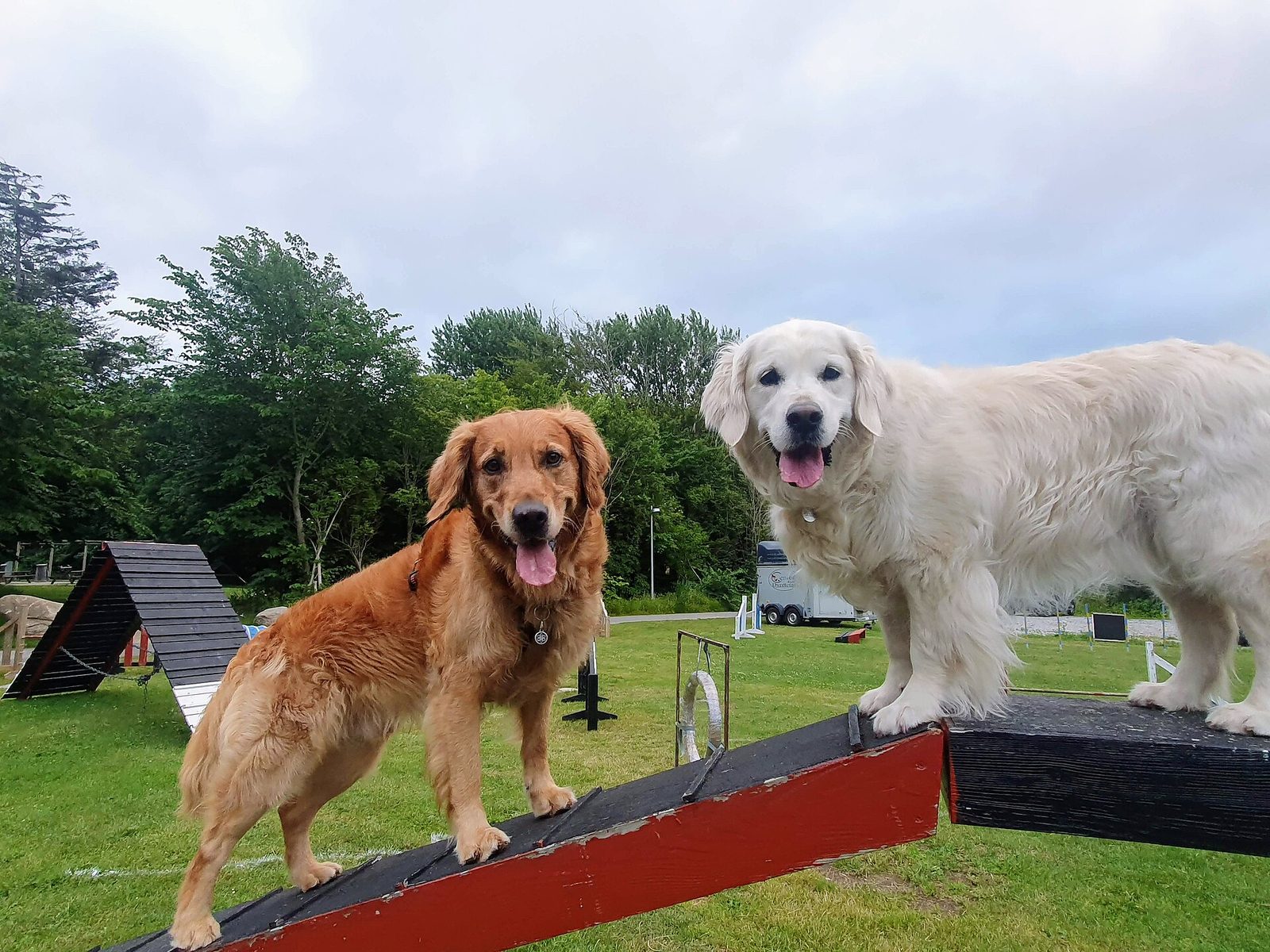

Reward-based training in action
Every lesson is built on reward-based methods — the same peer-reviewed science cited throughout this page.

What owners say

Real before & after — from Pup Class owners

Before

Neighbors would text me the moment I left. Howling, scratching, destroyed door frames. I was terrified to leave the house.

After

The departure routine from lesson 3 cut the panic in half within a week. He can handle 4 hours now. We're working toward a full workday.

Before

Rosie had severe separation anxiety — she'd hurt herself trying to get out. We couldn't even go to the grocery store.

After

Following the protocol meant going really slow at first. But the baseline shifted. She sleeps on her bed while we're gone instead of destroying everything.

Results vary. Every dog and situation is different.

See the transformation

Video testimonial

Watch: From separation panic to calm departures

Ready to start today?

30-day money-back guarantee. See our guarantee terms for details.

Get Instant Access — $47

Instant access · Built on published behavior science

Peer-reviewed evidence

Why reward-based graduated exposure works — and why nothing else does

Research cited from:PLOS ONEFrontiers in Veterinary ScienceJournal of Veterinary BehaviorApplied Animal Behaviour ScienceScientific ReportsAnimal WelfareJournal of Applied Animal Welfare SciencePhysiology & BehaviorVeterinary RecordJournal of Experimental PsychologyAnimals

A controlled trial of systematic desensitization plus counter-conditioning significantly reduced separation-related behaviours — 6 of 8 dogs showed almost complete elimination of the problem at three-month follow-up. Graduated exposure is exactly what Home Alone teaches.

— Butler, R., Sargisson, R.J., & Elliffe, D. (2011). The efficacy of systematic desensitization for treating the separation-related problem behaviour of domestic dogs. Applied Animal Behaviour Science, 129(2–4), 136–145.

Dogs trained with aversive methods show significantly higher stress behaviours and a more pessimistic emotional state than reward-based trained dogs — the last thing an already-anxious dog needs.

— Vieira de Castro, A.C., et al. (2020). Does training method matter? Evidence for the negative impact of aversive-based methods on companion dog welfare. PLOS ONE, 15(12), e0225023.

Dogs trained with negative reinforcement displayed more stress-related behaviours and gazed at their owners less often — eroding the very trust that calm alone-time is built on.

— Deldalle, S., & Gaunet, F. (2014). Effects of 2 training methods on stress-related behaviors of the dog (Canis familiaris) and on the dog–owner relationship. Journal of Veterinary Behavior, 9(2), 58–65.

Aversive training is associated with long-term negative welfare impacts and an increased probability of anxiety-related behaviours.

— Ziv, G. (2017). The effects of using aversive training methods in dogs — A review. Journal of Veterinary Behavior, 19, 50–60.

Reward-based training was at least as effective as electronic-collar training, with significantly fewer signs of stress.

— China, L., Mills, D.S., & Cooper, J.J. (2020). Efficacy of dog training with and without remote electronic collars vs. a focus on positive reinforcement. Frontiers in Veterinary Science, 7, 508.

In home visits to 53 dogs, those whose owners relied on rewards interacted with their owners more and learned new tasks faster. Separation work is, at its heart, teaching an anxious dog a new emotional response — and reward-built relationships learn faster.

— Rooney, N.J., & Cowan, S. (2011). Training methods and owner–dog interactions: links with dog behaviour and learning ability. Applied Animal Behaviour Science, 132(3–4), 169–177.

Across 364 dogs, reward-based training was associated with better obedience and fewer problem behaviours, while punishment-based methods correlated with more. The foundation of a calm, confident home-alone dog is built with reinforcement.

— Hiby, E.F., Rooney, N.J., & Bradshaw, J.W.S. (2004). Dog training methods: their use, effectiveness and interaction with behaviour and welfare. Animal Welfare, 13, 63–69.

A comprehensive review of separation anxiety in dogs found that the condition is rooted in hyper-attachment and distress — not disobedience — and that systematic desensitization is the gold-standard behavioral intervention.

— Ogata, N. (2016). Separation anxiety in dogs: What progress has been made in our understanding of the most common behavioral problems in dogs? Journal of Veterinary Behavior, 16, 28-35.

Dogs obtained as puppies from pet stores, dogs with a single adult owner, and dogs with no other pets in the home were at significantly elevated risk for separation anxiety — it's a predictable condition with identifiable risk factors, not a random personality flaw.

— Flannigan, G., & Dodman, N.H. (2001). Risk factors and behaviors associated with separation anxiety in dogs. JAVMA, 219(4), 460-466.

Behavior problems — with separation anxiety prominent among them — are among the most common reasons dogs are surrendered to shelters. Fixing this problem doesn't just improve your life; it can save your dog's.

— Salman, M.D., et al. (2000). Behavioral reasons for relinquishment of dogs and cats to 12 shelters. JAAWS, 3(2), 93-106.

Separation anxiety frequently co-occurs with other fear-based problems like noise phobia and generalized anxiety. A contextual approach that addresses the underlying fear conditioning — not just the departure — produces better outcomes.

— Amat, M., Camps, T., Le Brech, S., & Manteca, X. (2014). Separation anxiety in dogs: The implications of predictability and contextual fear for behavioural treatment. Animal Welfare, 23(3), 263-266.

Separation-related problems are not a single disorder — they include different subtypes driven by frustration, fear, or attachment disturbance, each requiring different intervention. A one-size-fits-all approach misses the mechanism. Home Alone teaches you to identify which subtype your dog shows.

— de Assis, L.S., et al. (2020). Developing diagnostic frameworks in veterinary behavioral medicine: Disambiguating separation related problems in dogs. Frontiers in Veterinary Science, 6, 499.

Dogs showed more attachment-related behaviors (following, contact-seeking, distress vocalization) toward owners they had a stronger bond with — and separation distress scaled with attachment intensity. Understanding your dog's attachment style is the first step to calibrating the departure protocol.

— Konok, V., Doka, A., & Miklosi, A. (2011). The behavior of the domestic dog during separation from and reunion with the owner. Applied Animal Behaviour Science, 135(4), 300-308.

In a survey of 13,700 Finnish pet dogs, noise sensitivity, fearfulness, and separation-related behavior were the most prevalent anxiety traits — and they frequently co-occurred. Addressing separation distress often requires addressing the dog's broader anxiety profile.

— Salonen, M., et al. (2020). Prevalence, comorbidity, and breed differences in canine anxiety in 13,700 Finnish pet dogs. Scientific Reports, 10, 2962.

Early life experiences — including insufficient socialization and limited exposure to being alone — were significantly associated with fearfulness and anxiety-related behaviors in adult dogs. Prevention starts in puppyhood, but the same desensitization principles apply to dogs who missed that window.

— Tiira, K., & Lohi, H. (2015). Early life experiences and exercise associate with canine anxieties. PLoS ONE, 10(11), e0141907.

Two approaches. One clear winner.

Punishment-based methodsReward-based (Pup Class method)
Punishment / shock collarSuppresses the symptom (barking) but escalates underlying fear. Dog learns the absence of the owner now predicts pain.
"Just ignore it" / floodingLeaving a fearful dog to 'work it out' without graduated exposure increases arousal and can worsen the anxiety over time.
Graduated departure training (this program)Systematically builds a new emotional association: absence = safety. Cortisol stays low. Calm behavior gets reinforced.

What's inside

12 lessons — from why it happens to what you do next

12 audio lessons · about 9 minutes each. Download and listen on any device, at your pace.

Separation Distress Decoded: Panic, Not SpiteWhat's really happening behind that door — the fear response in plain English. Once you see it as panic, not bad behavior, everything you do next changes.
Reading the Pre-Departure SpiralSpot the panting, pacing, and shadowing before your dog tips over. These early stress signals are your map — and most owners miss them completely.
Building the Safe Space: Alone-Time Starts Feeling GoodCreate one spot where your dog feels genuinely safe without you. The foundation every graduated departure is built on.
The Departure-Cue Ladder: Keys, Shoes, DoorDefuse the jacket-and-keys ritual that triggers panic before you've even left. Desensitize each cue until it predicts nothing scary.
Graduated Absences: Starting at Seconds, Staying Sub-ThresholdThe core protocol. Build alone time one second at a time, always under the line where panic begins — so every rep is a win, not a setback.
The Wind-Down RitualA short, repeatable routine that drops your dog's arousal before you leave. Calm in, calm out — the difference between a good session and a blown one.
Independence-Building While You're HomeStop reinforcing the velcro habit. Simple at-home enrichment and distance practice that teaches your dog being apart is normal and fine.
Surviving Real-Life Absences Without Losing ProgressWhat to do when work or life forces you out before your dog is ready — so a necessary absence doesn't reset two weeks of training.
Using Video to Measure the True ThresholdWhen and how to set up a camera to see exactly where calm ends and distress begins. Your most honest progress tracker.
Medication and the Vet-Behaviorist: When It's the Right CallAn honest, non-prescriptive look at when behavioral medication helps learning happen — and how it pairs with this protocol for tougher cases.
Relapse-Proofing: Holding the GainsWhy setbacks happen, how to read them early, and the exact recovery steps to protect the confidence you've built.
Your 6-Week Home Alone RoadmapThe week-by-week plan. What session to run, what counts as a win, and how to know you're ready to stretch the absence. No guesswork.

Why it works

Built different from everything else you've tried

🧠

Understand the neurological root of separation distress — not just the symptoms

📋

A step-by-step departure protocol you can start on day one

🚪

Departure-cue desensitization: jacket, keys, shoes — defuse the triggers before you leave

📈

Graduated alone-time training with a clear progression ladder

📓

Tracking workbook so you know exactly where you are and what comes next

🔄

Setback recovery plan — what to do when you have a bad week

Is this program right for you?

This is for you if…

  • Your dog barks, howls, or whines within minutes of you leaving
  • Your dog has destroyed furniture, doors, or belongings when alone
  • Your dog shows pre-departure anxiety — panting, pacing, shadowing you
  • You've been told by neighbors or a landlord that the noise is a problem
  • You want a humane, science-based plan — not a patch, but a real fix

This is NOT for you if…

  • You want a result in 48 hours with zero effort — this program requires consistent daily practice
  • Your dog has severe clinical separation anxiety that requires a veterinary behaviorist plus medication — this program is for mild-to-moderate cases
  • You're unwilling to temporarily adjust your schedule to run short alone-time sessions

What you're getting

Everything included in Home Alone

Total honest value: $168  →  today $47 (72% off)

Still on the fence? Watch this.

Video testimonial

Hear from a real owner

30-day money-back guarantee

30-day money-back guarantee. If you've accessed less than 25% of the content, we'll refund you in full. If you've gone further and the methods genuinely didn't work, complete our short refund questionnaire with evidence of having applied the protocols, and we'll refund you in full. Full terms in our Terms of Service.

Full guarantee details →

Typical outcomes

What owners experience with this method

Individual results vary. Every dog and situation is different. These outcomes reflect the science-backed methods in the program — not a guarantee of specific results.

Questions, answered straight

How is this different from just ignoring the crying?

Night-and-day different. Ignoring a panicking dog (flooding) doesn't teach new behavior — it just forces them to endure fear until exhaustion. Graduated departure training builds a new emotional response at a pace your dog can handle, so the fear state itself decreases. The science behind this distinction is covered in full in lesson two.

My dog has been like this for years. Is it too late?

No. Fear conditioning can be reversed at any age through systematic desensitization. Older dogs may take longer to progress through the protocol, but the mechanism is the same. The program includes notes on working with dogs who have long-established patterns.

Will this work alongside medication from my vet?

Yes — and for moderate-to-severe cases, behavioral medication plus behavior modification (this program) is often the gold-standard combination. The medication lowers the dog's arousal ceiling enough for learning to happen. If your vet has prescribed anxiolytics, this program is compatible and complementary.

I have to leave for work every day. How do I do the protocol?

Lesson 7 covers this directly — what to do when real life requires you to leave before your dog is fully ready. Short answer: dog daycare, a trusted neighbor, or remote work for the first few weeks dramatically accelerates results. We give you a realistic plan for people with full-time jobs.

What format are the lessons?

Audio lessons averaging 9 minutes each, designed to listen to on a walk or commute. No video required. The companion workbook is a downloadable PDF with the tracking sheets and checklists referenced in each lesson.

Is there a money-back guarantee?

Yes — 30 days. If you've accessed less than 25% of the content, full refund with no further questions. If you've gone further and the methods didn't work, complete our short refund questionnaire with evidence of effort and we'll refund you. Full guarantee details.

My dog is destructive — is this a training problem or a separation anxiety problem?

Usually both, and they have the same root. Destruction when alone is almost always stress-driven, not spite or boredom. Lesson one walks through how to tell the difference and why that distinction matters for the approach you take.

How long until I see results?

Most owners see measurable improvement in pre-departure anxiety behaviors within 2 to 3 weeks. Reliable calm during longer absences typically takes 6 to 8 weeks of consistent practice. This is a skill you're building, not a switch you're flipping — but the results compound.

Keep learning — free

Free guides on separation anxiety

More owner stories

The change you can make happen

Before

She'd start panicking before we even grabbed our keys. Just the sound of shoes would set her off.

After

Lesson 2 on pre-departure cues was the unlock. Breaking the association with coat/keys/bag changed her whole baseline before we even left.

Before

I was working from home full-time to avoid leaving him. My boss told me that had to stop. I was panicking almost as much as my dog.

After

The graduated protocol let us build up slowly — 5 minutes, then 20, then an hour. Three months in and I'm back at the office. He just sleeps on his bed.

Results vary. Every dog and situation is different.

Video testimonial

Another Home Alone owner's story

Full scientific bibliography (47 peer-reviewed studies)

Every claim in this program traces back to published, peer-reviewed research. Here is the complete bibliography powering Pup Class programs — 47 studies from 11+ Q1 journals.

  1. Vieira de Castro, A.C., Fuchs, D., Morello, G.M., Pastur, S., de Sousa, L., & Olsson, I.A.S. (2020). Does training method matter? Evidence for the negative impact of aversive-based methods on companion dog welfare. PLOS ONE, 15(12), e0225023.
  2. Vieira de Castro, A.C., Barrett, J., de Sousa, L., & Olsson, I.A.S. (2021). Improving dog training methods: Efficacy and efficiency of reward and mixed training methods. PLOS ONE, 16(2), e0247321.
  3. China, L., Mills, D.S., & Cooper, J.J. (2020). Efficacy of Dog Training With and Without Remote Electronic Collars vs. a Focus on Positive Reinforcing Methods. Frontiers in Veterinary Science, 7, 508.
  4. Ziv, G. (2017). The effects of using aversive training methods in dogs — A review. Journal of Veterinary Behavior, 19, 50-60.
  5. Guilherme Fernandes, J., Olsson, I.A.S., & Vieira de Castro, A.C. (2017). Do aversive-based training methods actually compromise dog welfare?: A literature review. Applied Animal Behaviour Science, 196, 1-12.
  6. Casey, R.A., Naj-Oleari, M., Campbell, S., Mayfield, M., & Sherwin, A. (2021). Dogs are more pessimistic if their owners use two or more aversive training methods. Scientific Reports, 11, 19023.
  7. Herron, M.E., Shofer, F.S., & Reisner, I.R. (2009). Survey of the use and outcome of confrontational and non-confrontational training methods in client-owned dogs showing undesired behaviors. Applied Animal Behaviour Science, 117(1-2), 47-54.
  8. Blackwell, E.J., Twells, C., Seawright, A., & Casey, R.A. (2008). The relationship between training methods and the occurrence of behavior problems, as reported by owners, in a population of domestic dogs. Journal of Veterinary Behavior, 3(5), 207-217.
  9. Deldalle, S., & Gaunet, F. (2014). Effects of 2 training methods on stress-related behaviors of the dog (Canis familiaris) and on the dog-owner relationship. Journal of Veterinary Behavior, 9(2), 58-65.
  10. Cooper, J.J., Cracknell, N., Hardiman, J., Wright, H., & Mills, D. (2014). The welfare consequences and efficacy of training pet dogs with remote electronic training collars in comparison to reward based training. PLOS ONE, 9(9), e102722.
  11. Hiby, E.F., Rooney, N.J., & Bradshaw, J.W.S. (2004). Dog training methods: their use, effectiveness and interaction with behaviour and welfare. Animal Welfare, 13, 63-69.
  12. Schilder, M.B.H., & van der Borg, J.A.M. (2004). Training dogs with help of the shock collar: short and long term behavioural effects. Applied Animal Behaviour Science, 85, 319-334.
  13. Casey, R.A., Loftus, B., Bolster, C., Richards, G.J., & Blackwell, E.J. (2014). Human directed aggression in domestic dogs (Canis familiaris): Occurrence in different contexts and risk factors. Applied Animal Behaviour Science, 152, 52-63.
  14. Rooney, N.J., & Cowan, S. (2011). Training methods and owner-dog interactions: Links with dog behaviour and learning ability. Applied Animal Behaviour Science, 132(3-4), 169-177.
  15. Butler, R., Sargisson, R.J., & Elliffe, D. (2011). The efficacy of systematic desensitization for treating the separation-related problem behaviour of domestic dogs. Applied Animal Behaviour Science, 129(2-4), 136-145.
  16. Howell, T.J., King, T., & Bennett, P.C. (2015). Puppy parties and beyond: the role of early age socialization practices on adult dog behavior. Veterinary Medicine: Research and Reports, 6, 143-153.
  17. Todd, Z. (2018). Barriers to the adoption of humane dog training methods. Journal of Veterinary Behavior, 25, 28-34.
  18. Arhant, C., Bubna-Littitz, H., Bartels, A., Futschik, A., & Troxler, J. (2010). Behaviour of smaller and larger dogs: Effects of training methods, inconsistency of owner behaviour and level of engagement in activities with the dog. Applied Animal Behaviour Science, 123(3-4), 131-142.
  19. Bradshaw, J.W.S., Blackwell, E.J., & Casey, R.A. (2009). Dominance in domestic dogs — useful construct or bad habit? Journal of Veterinary Behavior, 4(3), 135-144.
  20. Ogata, N. (2016). Separation anxiety in dogs: What progress has been made in our understanding of the most common behavioral problems in dogs? Journal of Veterinary Behavior, 16, 28-35.
  21. Schalke, E., Stichnoth, J., Ott, S., & Jones-Baade, R. (2007). Clinical signs caused by the use of electric training collars on dogs in everyday life situations. Applied Animal Behaviour Science, 105(4), 369-380.
  22. Masson, S., et al. (2018). Electronic training devices: Discussion on the pros and cons of their use in dogs as a basis for the position statement of the European Society of Veterinary Clinical Ethology. Journal of Veterinary Behavior, 25, 71-75.
  23. Salman, M.D., et al. (2000). Behavioral reasons for relinquishment of dogs and cats to 12 shelters. Journal of Applied Animal Welfare Science, 3(2), 93-106.
  24. Kwan, J.Y., & Bain, M.J. (2013). Owner attachment and problem behaviors related to relinquishment and training techniques of dogs. Journal of Applied Animal Welfare Science, 16(2), 168-183.
  25. Fukuzawa, M., & Hayashi, N. (2013). Comparison of 3 different reinforcements of learning in dogs (Canis familiaris). Journal of Veterinary Behavior, 8(4), 221-224.
  26. Flannigan, G., & Dodman, N.H. (2001). Risk factors and behaviors associated with separation anxiety in dogs. Journal of the American Veterinary Medical Association, 219(4), 460-466.
  27. Amat, M., Camps, T., Le Brech, S., & Manteca, X. (2014). Separation anxiety in dogs: The implications of predictability and contextual fear for behavioural treatment. Animal Welfare, 23(3), 263-266.
  28. Scott, J.P., & Fuller, J.L. (1965). Genetics and the Social Behavior of the Dog. University of Chicago Press.
  29. Rescorla, R.A. (1988). Pavlovian conditioning: It's not what you think it is. American Psychologist, 43(3), 151-160.
  30. Seligman, M.E.P., & Maier, S.F. (1967). Failure to escape traumatic shock. Journal of Experimental Psychology, 74(1), 1-9.
  31. Polsky, R.H. (2000). Can aggression in dogs be elicited through the use of electronic pet containment systems? Journal of Applied Animal Welfare Science, 3(4), 345-357.
  32. Haverbeke, A., Laporte, B., Depiereux, E., Giffroy, J.-M., & Diederich, C. (2008). Training methods of military dog handlers and their effects on the team's performances. Applied Animal Behaviour Science, 113(1-3), 110-122.
  33. Beerda, B., Schilder, M.B.H., van Hooff, J.A.R.A.M., de Vries, H.W., & Mol, J.A. (1998). Behavioural, saliva cortisol and heart rate responses to different types of stimuli in dogs. Applied Animal Behaviour Science, 58(3-4), 365-381.
  34. Beerda, B., Schilder, M.B.H., van Hooff, J.A.R.A.M., de Vries, H.W., & Mol, J.A. (1999). Chronic stress in dogs subjected to social and spatial restriction. I. Behavioral responses. Physiology & Behavior, 66(2), 233-242.
  35. Appleby, D.L., Bradshaw, J.W.S., & Casey, R.A. (2002). Relationship between aggressive and avoidance behaviour by dogs and their experience in the first six months of life. Veterinary Record, 150(14), 434-438.
  36. de Assis, L.S., Matos, R., Pike, T.W., Burman, O.H.P., & Mills, D.S. (2020). Developing diagnostic frameworks in veterinary behavioral medicine: Disambiguating separation related problems in dogs. Frontiers in Veterinary Science, 6, 499.
  37. Salonen, M., Sulkama, S., Mikkola, S., Liinamaa, J., Hakanen, E., Tiira, K., & Lohi, H. (2020). Prevalence, comorbidity, and breed differences in canine anxiety in 13,700 Finnish pet dogs. Scientific Reports, 10, 2962.
  38. Jagoe, A., & Serpell, J.A. (1996). Owner characteristics and interactions and the prevalence of canine behaviour problems. Applied Animal Behaviour Science, 47(1-2), 31-42.
  39. Owczarczak-Garstecka, S.C., et al. (2025). Association between training methods and owner-reported problem behaviours in dogs enrolled in the 'Generation Pup' longitudinal study in the UK. Journal of Veterinary Behavior, 77, 52-60.
  40. Stellato, A.C., Jajou, S., Dewey, C.E., Widowski, T.M., & Niel, L. (2019). Effect of a standardized four-week desensitization and counter-conditioning training program on pre-existing veterinary fear in companion dogs. Animals, 9(10), 767.
  41. Puurunen, J., et al. (2020). Inadequate socialisation, inactivity, and urban living environment are associated with social fearfulness in pet dogs. Scientific Reports, 10, 3527.
  42. Pluijmakers, J.J.T.M., Appleby, D.L., & Bradshaw, J.W.S. (2010). Exposure to video images between 3 and 5 weeks of age decreases neophobia in domestic dogs. Applied Animal Behaviour Science, 126(1-2), 51-58.
  43. McEvoy, V., Espinosa, U.B., Crump, A., & Arnott, G. (2022). Canine socialisation: A narrative systematic review. Animals, 12(21), 2895.
  44. Konok, V., Doka, A., & Miklosi, A. (2011). The behavior of the domestic dog (Canis familiaris) during separation from and reunion with the owner: A questionnaire and an experimental study. Applied Animal Behaviour Science, 135(4), 300-308.
  45. Yin, S., Fernandez, E.J., Pagan, S., Richardson, S.L., & Snyder, G. (2008). Efficacy of a remote-controlled, positive-reinforcement, dog-training system for modifying problem behaviors exhibited when people arrive at the door. Applied Animal Behaviour Science, 113(1-3), 123-138.
  46. Tiira, K., & Lohi, H. (2015). Early life experiences and exercise associate with canine anxieties. PLoS ONE, 10(11), e0141907.
  47. Storengen, L.M., & Lingaas, F. (2015). Noise sensitivity in 17 dog breeds: Prevalence, breed risk and correlation with fear in other situations. Applied Animal Behaviour Science, 171, 152-160.

Your dog can learn that alone time is safe.

12 lessons. A tracking workbook. A protocol that works. $120 just $47 today — 30-day guarantee.

$47 $120

Get Instant Access — $47

30-day money-back guarantee · Instant access · Reward-based, science-backed

$47$120 · 30-day guarantee
Get Instant Access — $47