Questions? Reach a real person:

65% off the complete library

Every program we make. One honest price.

The complete Pup Class library — reactivity, separation anxiety, recall, biting, the full behavior masterclass, and a free supplement — for $497. That's $913 off the regular price.

Reward-based, backed by published research

$497 $1410

Get the Vault — $497 (65% off)

🔒 30-day money-back guarantee · Instant access

✓ Positive reinforcement only✓ Force-free · No shock collars✓ 47+ peer-reviewed studies✓ AVSAB-aligned methods

Your dog has more than one problem. Most do. Reactivity and anxiety tend to travel together. Separation distress and impulse control live in the same neighbourhood. A dog who bolts at the park often has recall issues and leash-pulling issues and a few other things you've been ignoring because there's already too much to deal with. You've been buying programs one at a time, or watching YouTube one problem at a time, or seeing trainers one issue at a time. It adds up — in money, in time, in the mental load of keeping track of five different protocols that may or may not be built on compatible foundations. The Good Dog Vault is the other way to do this. One purchase. Every program we make. A single coherent system built on the same behavioral science throughout — so the reactivity protocol and the separation protocol and the recall protocol aren't fighting each other. They're speaking the same language. $1,410 if you bought them separately. $497 for everything. Lifetime access. All future updates included — including new programs as we release them. That's the offer. Here's what you get.

Video testimonial

Watch: why this family chose the Vault

You shouldn't have to choose which problem to fix first.

Most dogs who end up in a Vault owner's hands have more than one thing going on. Reactivity and anxiety. Separation distress and poor recall. Biting and the early signs of resource guarding. These things co-occur because they share roots — in how the dog's nervous system was shaped, in what their history taught them, in the gap between the behavior they were asked to perform and the foundation they were given to do it.

Buying programs one at a time means you're always playing catch-up. You fix the reactivity (sort of) and then the separation anxiety gets worse because you've been focused elsewhere. You work on recall and ignore the biting until a kid gets hurt. You're reactive to problems, not building a system.

99%

In an analysis of over 43,000 dogs, more than 99% had at least one behavior problem — and the average dog had several. The dog with exactly one issue is the rare exception. If yours has a few things going on, that isn't a broken dog. That's a normal dog who needs a system, not five disconnected fixes.

— Beaver, B.V. (2025), Journal of Veterinary Behavior; Texas A&M College of Veterinary Medicine, analysis of the Dog Aging Project

The Good Dog Vault is the system.

A calm, well-adjusted dog walking beside its owner
Not one trick fixed at a time. A whole dog — reactivity, anxiety, recall, manners — built on one coherent foundation.

Every problem you're living with right now — and the program inside that ends it

Read this list slowly. However many of these you recognize, that's how many reasons the Vault already exists for you.

"My dog turns into a lunatic the second another dog appears." The lunging, the barking, the lurch on the leash that nearly takes your shoulder out — walks stopped being a pleasure and became a thing you brace for. The Calm Walk Method takes a reactive dog back under threshold and rebuilds the walk from the ground up.

"She destroys the house the second I leave — I can't even go to work." The chewed door frame. The neighbor's note about the howling. The knot in your stomach every time you reach for your keys. That isn't spite — it's panic. Home Alone walks you through the exact desensitization protocol that teaches a dog that being alone is safe.

"He completely ignores me. I've tried everything." Perfect in the kitchen, stone deaf at the park. You call and call and watch him run the other way while strangers stare. Speak Dog builds a recall you can actually bet your dog's life on — off leash, first call.

"He won't stop biting — my hands look like I lost a fight." The shredded sleeves, the kids climbing onto the back of the couch, the bruised hands from an adult dog who never learned mouth control. Whether it's a puppy in the developmental window or a grown dog who missed it, The Gentle-Mouth Method teaches bite inhibition at any age.

Maybe it's one of these. Maybe it's three. The cruel part of dog problems is that they don't wait their turn — and fixing them one purchase at a time means you're always a step behind your own dog. The Vault hands you the answer to all four on day one, plus the masterclass that handles whatever shows up next.

Seventy-seven audio lessons total. Every workbook, every checklist, every tracking sheet. A complete coherent science base — the same reward-based behavioral framework throughout — so the protocols work with each other, not against each other. And the Behavior Architect as the capstone: the 24-lesson masterclass that teaches you to assess any behavior, understand what's driving it, and build a modification plan for anything the programs didn't explicitly cover.

The science behind every lesson is the same. Vieira de Castro et al. (2020): reward-based training produces measurably less stress and better welfare. Ziv (2017): aversive training increases fear, anxiety, and aggression — across all behavior types, not just one. China et al. (2020): reward-based training is at least as effective as electronic-collar training, with significantly fewer signs of stress. Guilherme Fernandes, Olsson & Vieira de Castro (2017) reviewed the entire literature and found zero evidence that aversive methods offer any advantage — while Casey et al. (2021) showed dogs trained with multiple aversive methods carry a measurably more pessimistic emotional state.

No punishment. No dominance theory. No shock collars. No "just alpha up." Todd (2018) found the biggest barriers to humane methods are misinformation and marketing — not the science itself. Every lesson in the Vault is built on published behavioral science and teaches you the mechanism — so you understand what you're doing and why, not just what button to press.

A guided tour of everything inside the Vault

This is the part most "bundles" skip — they list five titles, make the number look big, and hope you don't ask what's actually in the box. Here's exactly what you're getting, program by program, so you can see for yourself why $497 for all of it is the easiest math on this page.

The Calm Walk Method — 12 lessons — $50 on its own. The complete reactivity protocol. Reading your dog's threshold, engineering walks where your dog literally can't rehearse the meltdown, the look-and-dismiss pattern that turns "scary dog across the street" into "no big deal," and the loose-leash mechanics that kill the pulling at the source. The program that turns the walk you dread back into the best part of your day.

Home Alone — 12 lessons — $120 on its own. Separation confidence built the way the research says it actually works — gradual, systematic, on your dog's nervous system's terms. Ogata (2016) confirmed that separation anxiety is rooted in genuine distress, not disobedience, and that systematic desensitization is the gold-standard intervention. Departure-cue desensitization, the absence ladder, what to do about the howling and the chewing without crating your dog into deeper panic. Butler, Sargisson & Elliffe (2011) documented near-complete elimination of separation behaviour in 6 of 8 dogs using exactly this kind of systematic desensitization — and it held at the three-month follow-up.

Speak Dog — 12 lessons — $120 on its own. Bombproof recall, plus the broader language of getting your dog to actually listen when it counts. The recall game, proofing against real-world distraction, and the emergency recall you keep in your back pocket for the day the gate gets left open. Cooper et al. (2014) ran a randomized controlled trial and found electronic collars gave zero recall advantage over reward-based training — while raising the dog's stress. This is the method that won.
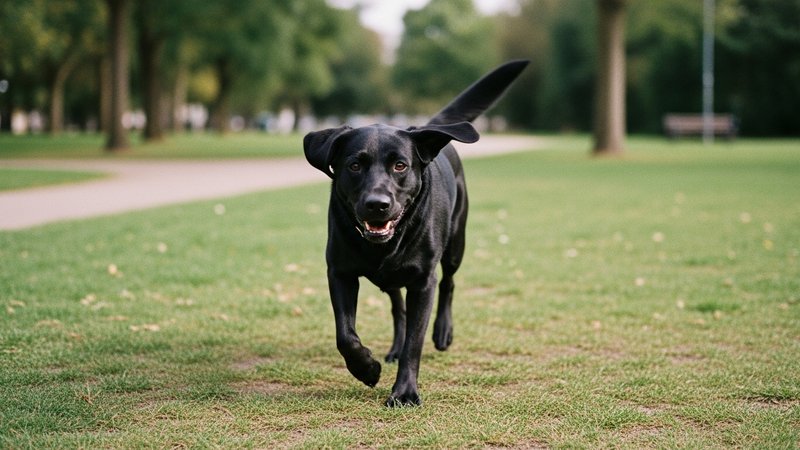
A dog running back toward its owner across an open field
Off leash, full speed, the first time you call. That's not a personality you got lucky with — it's a skill this library builds.

The Gentle-Mouth Method — 18 lessons — $120 on its own. The four real drivers of biting, the bite-inhibition protocol that teaches a dog "how hard is too hard" — at any age — the arousal de-escalation protocol, and resource-guarding prevention baked in before it starts. Twelve lessons for the puppy developmental window, plus six dedicated adult-dog modules for dogs who missed it.

Behavior Architect — 24 lessons — $1,000 regular, $397 today. The capstone, and the reason the whole library hangs together. This is the one that turns you from someone following protocols into someone who understands dogs. Assessment. What's truly driving a behaviour. Threshold, desensitization, counter-conditioning, and how to build a modification plan from a blank page. Once you own this, no future problem can blindside you — you'll diagnose it and build the fix yourself. On its own, the masterclass is $397 — for just $100 more, the Vault hands you the masterclass plus four full programs on top.

BONUS — Loose-Leash Mechanics Supplement — 5 lessons. The physical handling layer underneath all of it — how to hold the leash, where to stand, how to use your own body as the first tool before you reach for any technique. Included free for Vault members.

Add it up the honest way and you're holding a complete behavioural education — every common problem, plus the framework for the uncommon ones — for just $100 more than the masterclass alone.

The math, done honestly

We hate fake discounts as much as you do — the "$2,000 value, yours for $97" nonsense where the $2,000 was never a real number. So here's the Vault's math with nothing hidden:

Those five regular prices total $1,410. They aren't invented anchors — every one is a real, purchasable page on this site, and you'll see that regular price struck through on each one. The Vault hands you all of it for $497. Here's the part that makes the math almost silly: the Behavior Architect masterclass on its own is $397 today. The Vault is $497 — just a hundred dollars more — and you get the masterclass plus four full protocols on top of it. Four programs for a hundred bucks is the easiest math on the site.

Why a bundle beats five separate purchases

It isn't only the money. When you buy programs one at a time from five different places, you get five different philosophies — and some of them quietly contradict each other. The reactivity advice says "never punish the growl"; the recall gadget says "add a correction." You end up the referee between methods that don't agree, and your dog pays for the confusion.

Every program in the Vault is built on one scientific foundation — the same reward-based framework, the same vocabulary, the same view of how learning actually works. The separation protocol and the reactivity protocol and the recall protocol reinforce each other because they're speaking the same language. And the Behavior Architect sits on top as the operating system: once you understand assessment, threshold, desensitization and counter-conditioning, you can build a plan for any problem the specific programs didn't name.

The $1,410 regular price is real. Each program shows it struck through on its own page. The Vault is $497 — 65% off that regular price — because we want people to have the whole system, not just a piece of it.

Lifetime access. All future updates. Every workbook. One purchase.

What you actually walk away owning

This isn't a folder of videos you'll half-watch. It's a complete operating manual for your dog's behavior, and here's what's in your hands when you're done:

Why "lifetime" is the part that pays you back

Most dog problems don't arrive on a schedule. You buy a recall course this spring, and the resource guarding shows up next winter. With the Vault, the answer to the next problem is already sitting in your library — paid for, waiting, built on the same foundation as everything else you've already learned. Get a second dog in three years? It's all still there. That's why the honest comparison isn't "$497 versus a $50 program." It's "$497 once versus a decade of buying fixes one panic at a time."

Why $497 is the lowest price this will ever carry

Here's the honest mechanism — no fake countdown clock, no "spots remaining" nonsense. The Vault includes every program we ever release, free, for the life of your membership. That's a promise that costs us more to keep with every new program we add — so the price of the Vault goes up each time the library grows.

The people who buy today at $497 lock that number in forever and get every future program at no extra charge. The people who wait pay the higher price the next release triggers. There is no version of this where waiting saves you money. Today the Vault is the smallest it will ever be, and $497 is the least it will ever cost. Every program we add from here makes it worth more — and priced higher — for the next person.

And the bonus won't always be in the box. The Loose-Leash Mechanics Supplement is included free right now. Bonuses rotate out. Buy today and it's yours to keep no matter what we do with it later.

What every week of "I'll deal with it later" actually costs

Be honest with yourself about the real price of waiting, because it isn't zero — it's just hidden.

It's another week of walks you brace for instead of enjoy. Another week of coming home to a destroyed door and a dog that spent the day in a panic. Another week of a recall you can't trust within fifty feet of a road. Another week of a puppy spending its one irreplaceable learning window practicing exactly the wrong things.

Behavior doesn't hold still while you make up your mind. Every single day the old pattern runs, your dog is rehearsing it — and a rehearsed behaviour is a stronger, more automatic, harder-to-overwrite behaviour tomorrow than it was today. "Later" isn't free. "Later" is the most expensive option on the menu, you just don't get the bill until the problem is twice as deep.

The dog you actually want is on the far side of a decision you can make in the next two minutes. The dog you've got is whatever "later" keeps handing you.

Lifetime access. All future updates. Every workbook. One purchase — at the lowest price it will ever carry.

Your risk on this is zero. Ours is all of it.

Buy the entire Vault. Open every program. Work the protocol that's hurting you most right now. You're protected by our 30-day money-back guarantee: if you've used less than 25% of the content, we refund you in full. If you've gone further and the methods genuinely didn't work for your dog, fill out our short questionnaire with evidence of effort and we refund you. We eat the cost either way. That's how confident we are. Full guarantee details.

You've already spent more than $497 in vet-recommended trainers, returned gadgets, chewed shoes, replaced door frames and ruined walks. The only question left is whether you keep paying for the problem — or pay once, today, for the answer to all of it.

If your dog has more than one problem, or you just want to be ready for whatever comes next — this is the most obvious decision on the entire site. Get the Vault. 30-day money-back guarantee — see terms.
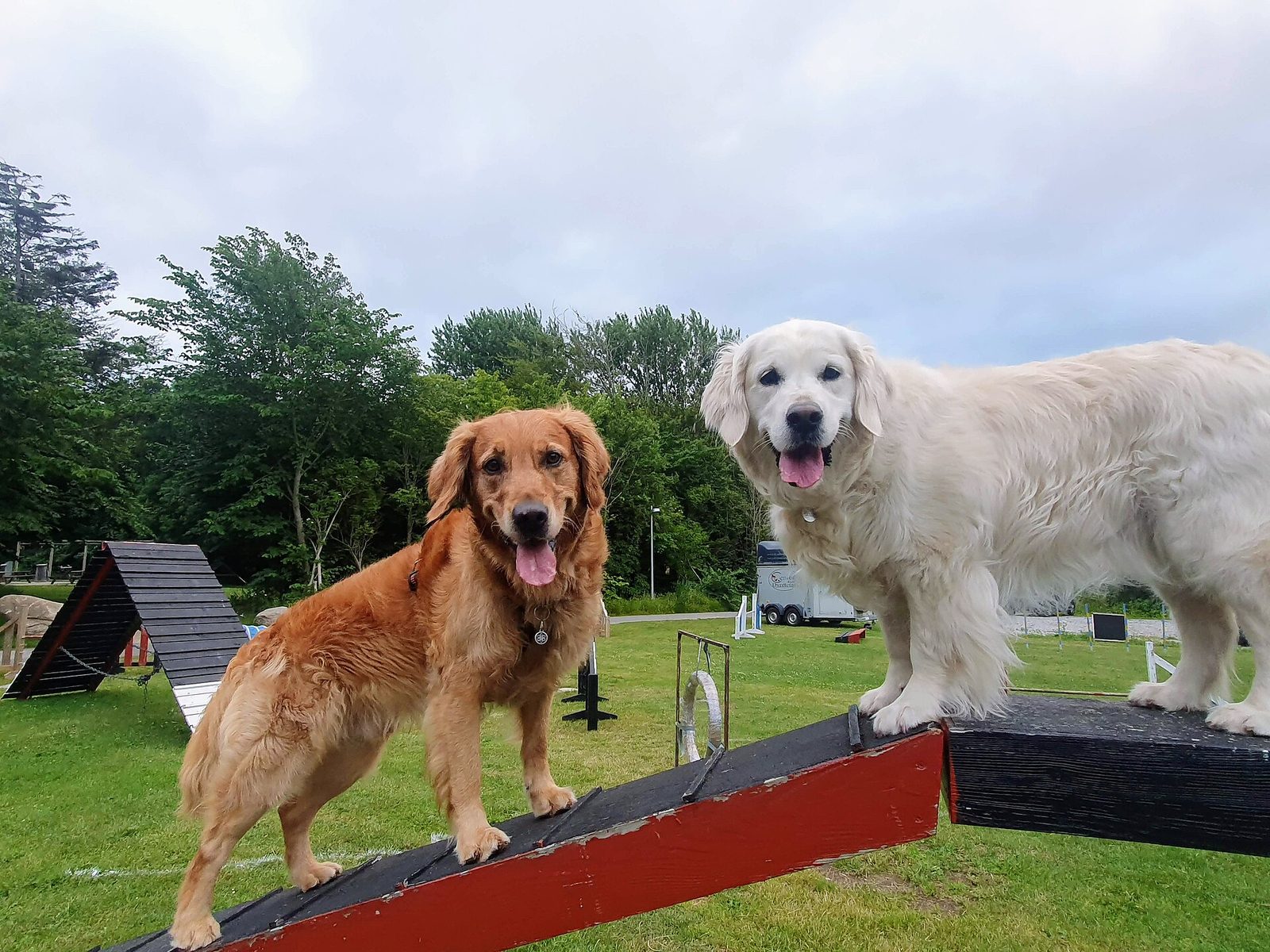
Reward-based training in action
Every lesson is built on reward-based methods — the same peer-reviewed science cited throughout this page.

What owners say

Real before & after — from Pup Class owners

Before

We had a reactive adult dog AND just got a new puppy at the same time. Multiple problems, multiple programs. I was overwhelmed.

After

Getting the Vault meant I could tackle the reactivity with the Calm Walk Method and the puppy biting with Land Shark at the same time. The Behavior Architect tied it all together.

Before

She came with reactivity, separation anxiety, and zero recall. Each program alone seemed like it would help but I knew I needed everything.

After

Doing them in order — recall first so she had a foundation, then separation, then reactivity — made sense. The programs reference each other. It's clearly designed as a system.

Results vary. Every dog and situation is different.

See the transformation

Video testimonial

Watch: the Vault in action

Real transformations, on camera

Watch what owners say about every program

Video testimonial

Good Dog Vault owner

Video testimonial

Good Dog Vault owner

Video testimonial

Behavior Architect owner

Video testimonial

Home Alone owner

Video testimonial

Behavior Architect transformation

Video testimonial

Calm Walk transformation

Video testimonial

Behavior Architect owner

Video testimonial

Speak Dog recall success

Ready to start today?

30-day money-back guarantee. See our guarantee terms for details.

Get the Vault — $497 (65% off)

Instant access · Reward-based, backed by published research

Peer-reviewed evidence

One scientific foundation. Every problem covered.

Research cited from:PLOS ONEFrontiers in Veterinary ScienceJournal of Veterinary BehaviorApplied Animal Behaviour ScienceScientific ReportsAnimal WelfareJournal of Applied Animal Welfare SciencePhysiology & BehaviorVeterinary RecordJournal of Experimental PsychologyAnimals

Aversive training is associated with long-term negative welfare impacts, increased anxiety, and elevated aggression — across all behaviour types.

— Ziv, G. (2017). The effects of using aversive training methods in dogs — A review. Journal of Veterinary Behavior, 19, 50–60.

Dogs trained with reward-based methods show significantly lower stress behaviours and a more optimistic emotional state than those trained with aversive methods.

— Vieira de Castro, A.C., et al. (2020). Does training method matter? Evidence for the negative impact of aversive-based methods on companion dog welfare. PLOS ONE, 15(12), e0225023.

Confrontational, punishment-based techniques elicited an aggressive response from at least a quarter of the dogs they were used on — why every program in the Vault is reward-based.

— Herron, M.E., Shofer, F.S., & Reisner, I.R. (2009). Survey of the use and outcome of confrontational and non-confrontational training methods in client-owned dogs showing undesired behaviors. Applied Animal Behaviour Science, 117(1–2), 47–54.

Owners using reward-based training reported fewer problem behaviours than those using punishment — replicated across large survey populations.

— Blackwell, E.J., Twells, C., Seawright, A., & Casey, R.A. (2008). The relationship between training methods and the occurrence of behavior problems, as reported by owners, in a population of domestic dogs. Journal of Veterinary Behavior, 3(5), 207–217.

Early-age, reward-based socialization predicts well-adjusted adult dogs with fewer undesirable behaviours — the prevention half of the Vault's library.

— Howell, T.J., King, T., & Bennett, P.C. (2015). Puppy parties and beyond: the role of early age socialization practices on adult dog behavior. Veterinary Medicine: Research and Reports, 6, 143–153.

Reward-based training was at least as effective as electronic-collar training, with significantly fewer signs of stress.

— China, L., Mills, D.S., & Cooper, J.J. (2020). Efficacy of dog training with and without remote electronic collars vs. a focus on positive reinforcement. Frontiers in Veterinary Science, 7, 508.

A randomized controlled recall trial found electronic-collar training conferred no advantage over reward-based training, while raising physiological and behavioural signs of stress — the whole-library case for reward-based methods.

— Cooper, J.J., Cracknell, N., Hardiman, J., Wright, H., & Mills, D. (2014). The welfare consequences and efficacy of training pet dogs with remote electronic training collars in comparison to reward based training. PLOS ONE, 9(9), e102722.

Across 364 dogs, reward-based training was associated with better obedience and fewer problem behaviours than punishment-based training.

— Hiby, E.F., Rooney, N.J., & Bradshaw, J.W.S. (2004). Dog training methods: their use, effectiveness and interaction with behaviour and welfare. Animal Welfare, 13, 63–69.

Positive-punishment and negative-reinforcement methods were identified as risk factors for human-directed aggression — why every protocol in the Vault is force-free.

— Casey, R.A., Loftus, B., Bolster, C., Richards, G.J., & Blackwell, E.J. (2014). Human directed aggression in domestic dogs (Canis familiaris): occurrence in different contexts and risk factors. Applied Animal Behaviour Science, 152, 52–63.

A survey of professionals found that the biggest barriers to adopting humane methods are misinformation, tradition, and aversive-tool marketing — not any shortcoming of the science. The Vault exists to give owners the science directly.

— Todd, Z. (2018). Barriers to the adoption of humane dog training methods. Journal of Veterinary Behavior, 25, 28-34.

Dogs whose owners used two or more aversive methods were measurably more pessimistic — their emotional baseline shifted toward threat expectation, worsening every problem at once. One coherent reward-based system avoids this entirely.

— Casey, R.A., et al. (2021). Dogs are more pessimistic if their owners use two or more aversive training methods. Scientific Reports, 11, 19023.

A comprehensive literature review found zero evidence that aversive methods offer any training or welfare advantage — while documenting consistent welfare costs across every behavior type the Vault covers.

— Guilherme Fernandes, J., Olsson, I.A.S., & Vieira de Castro, A.C. (2017). Do aversive-based training methods actually compromise dog welfare?: A literature review. Applied Animal Behaviour Science, 196, 1-12.

Separation anxiety is rooted in hyper-attachment and genuine distress, and systematic desensitization is the gold-standard behavioral intervention — exactly the protocol taught in the Vault's Home Alone program.

— Ogata, N. (2016). Separation anxiety in dogs: What progress has been made in our understanding of the most common behavioral problems in dogs? Journal of Veterinary Behavior, 16, 28-35.

In a controlled trial, reward-only training was just as effective as mixed reward-and-aversive training — with fewer stress signals. Adding punishment to any protocol in this library would buy zero extra learning and measurable extra harm.

— Vieira de Castro, A.C., et al. (2021). Improving dog training methods: Efficacy and efficiency of reward and mixed training methods. PLOS ONE, 16(2), e0247321.

The data, in one picture

One reason every program in the Vault is reward-based

Across every problem the Vault covers — reactivity, guarding, biting, barking — the punishment-based 'fix' carries the same risk. This is the share of dogs that responded to each confrontational technique with aggression. Not one program in this library uses them.

Source: Herron, Shofer & Reisner (2009), Applied Animal Behaviour Science 117(1–2), 47–54 — proportion of surveyed dogs responding aggressively to each technique.

Two approaches. One clear winner.

Punishment-based methodsReward-based (Pup Class method)
Buying programs one at a time as problems come upHigher total cost ($1,410 if you buy all five). No guarantee the protocols are built on compatible foundations. No Behavior Architect masterclass to tie it together.
Hiring a private trainer per problemTypically $100 to $200 per session. A full reactivity protocol alone can run $1,500 to $3,000 in session fees. No recorded material to revisit. Methods vary by trainer and may conflict.
The Good Dog Vault$497 once — just $100 more than the Behavior Architect masterclass alone ($397), but you get four full programs on top of it. Every workbook, every update. One coherent system built on published behavior science throughout. Lifetime access.

Why it works

Built different from everything else you've tried

📚

Complete library: every available Pup Class program — reactivity, separation, recall, biting & mouthing, and the full behavior masterclass

♾️

Lifetime access: come back to any lesson any time — when a new problem shows up, the answer is already in the vault

🔄

All future updates included: as the library grows, Vault members get everything at no extra cost

🧠

One coherent science base: every program uses the same reward-based behavioral framework, so they work together, not against each other

📓

All workbooks included: every tracking sheet, checklist, field guide, and protocol from every program

💰

Honest savings: $913 off the regular price — and the regular price is the real, honest sum of what each program costs separately

Is this program right for you?

This is for you if…

  • Your dog has multiple issues and you want a complete, coherent system rather than piecemeal fixes
  • You're a new dog owner who wants to start with everything rather than play catch-up later
  • You want lifetime access so you have the answer ready when new problems come up
  • You've been spending on trainers and want a science-based foundation you own permanently
  • You want the best per-dollar value in reward-based dog behavior education

This is NOT for you if…

  • You have exactly one problem and only want to fix that one thing — the individual program is the right call
  • Your dog has a clinical-level aggression case requiring in-person veterinary behaviorist assessment — no recorded program replaces that
  • You want a quick fix with no training investment — the Vault is a complete education, not a shortcut

What you're getting

Everything in the Vault

Total honest value: $1410  →  today $497 (65% off)

Still on the fence? Watch this.

Video testimonial

Hear from a Pup Class family

30-day money-back guarantee

30-day money-back guarantee. If you've accessed less than 25% of the content, we'll refund you in full. If you've gone further and the methods genuinely didn't work, complete our short refund questionnaire with evidence of having applied the protocols, and we'll refund you in full. Full terms in our Terms of Service.

Full guarantee details →

Typical outcomes

What owners experience with this method

Individual results vary. Every dog and situation is different. These outcomes reflect the science-backed methods in the program — not a guarantee of specific results.

Questions, answered straight

Is the $1,410 regular price a made-up anchor, or is that real?

It's real. It's the honest sum of each program's full list price: The Calm Walk Method ($50) + Home Alone ($120) + Speak Dog ($120) + The Gentle-Mouth Method ($120) + Behavior Architect ($1,000) = $1,410. The Loose-Leash Mechanics Supplement ($19) is tossed in free as a bonus on top of that, not added to the anchor. At today's sale prices the programs total over $800 separately — the Vault at $497 is always the cheapest way to own the whole system. We don't inflate regular prices to make discounts look bigger.

Do I need to complete all the programs?

No. Start with whatever your dog needs most right now. Most Vault members start with the one program that's most urgent, then come back to others as new situations arise or as they want to deepen their understanding. The Behavior Architect is a useful foundation to come back to after you've worked through one or two specific programs — it ties the science together.

What's included in the Loose-Leash Mechanics Supplement?

Five short lessons on the physical mechanics of leash handling — how to hold the leash, position relative to your dog, how to use your body as a tool before you reach for any training technique. It complements the Calm Walk Method but is included for all Vault members because good mechanics matter for every program that involves any on-leash work.

What does 'lifetime access' mean?

You pay once and you own permanent access to everything in the Vault. No subscription. No renewal. As we add new programs to the library, Vault members get them at no extra charge. If you come back in three years because you got a second dog, everything is still there.

What if I've already bought one of the individual programs?

Email us with your original purchase receipt and we'll credit the amount you paid toward the Vault price. We don't want you to pay for the same thing twice.

Is there a money-back guarantee?

Yes — 30 days. If you've accessed less than 25% of the content, full refund with no further questions. If you've gone further and the methods didn't work, complete our short refund questionnaire with evidence of effort and we'll refund you. Full guarantee details.

Which program should I start with?

Start with the one that's causing you the most pain right now. Reactive dog pulling you down the street? Start with the Calm Walk Method. Dog panicking when you leave? Start with Home Alone. Dog that won't come back at the park? Speak Dog. Dog that bites or mouths people? The Gentle-Mouth Method. Once the most urgent problem is under control, the Behavior Architect is the best next step — it puts everything in context and gives you a framework for anything that comes up later.

Is this suitable for dogs of any age?

Mostly yes. Every program in the Vault works across adult dogs of any age, and the Behavior Architect is useful at every life stage. If your dog is a senior with a long history of a behavior problem, expect a longer timeline but the same mechanism applies.

More owner stories

The change you can make happen

Before

Old dog, new problems. He developed anxiety after we moved. And his recall had always been bad. I didn't want to buy piecemeal.

After

Bought the Vault for the value and ended up using 4 of the 5 programs in the first month. Already seeing improvement. The Behavior Architect alone is $397 — the extra $100 for four more programs was a no-brainer.

Before

She had leash reactivity, terrible recall, and the puppy biting never stopped. I was buying programs one at a time and falling behind.

After

The Vault let me run the right program for each issue simultaneously. Three months in and my husband says it's like we have a different dog. Worth every penny.

Results vary. Every dog and situation is different.

Full scientific bibliography (47 peer-reviewed studies)

Every claim in this program traces back to published, peer-reviewed research. Here is the complete bibliography powering Pup Class programs — 47 studies from 11+ Q1 journals.

  1. Vieira de Castro, A.C., Fuchs, D., Morello, G.M., Pastur, S., de Sousa, L., & Olsson, I.A.S. (2020). Does training method matter? Evidence for the negative impact of aversive-based methods on companion dog welfare. PLOS ONE, 15(12), e0225023.
  2. Vieira de Castro, A.C., Barrett, J., de Sousa, L., & Olsson, I.A.S. (2021). Improving dog training methods: Efficacy and efficiency of reward and mixed training methods. PLOS ONE, 16(2), e0247321.
  3. China, L., Mills, D.S., & Cooper, J.J. (2020). Efficacy of Dog Training With and Without Remote Electronic Collars vs. a Focus on Positive Reinforcing Methods. Frontiers in Veterinary Science, 7, 508.
  4. Ziv, G. (2017). The effects of using aversive training methods in dogs — A review. Journal of Veterinary Behavior, 19, 50-60.
  5. Guilherme Fernandes, J., Olsson, I.A.S., & Vieira de Castro, A.C. (2017). Do aversive-based training methods actually compromise dog welfare?: A literature review. Applied Animal Behaviour Science, 196, 1-12.
  6. Casey, R.A., Naj-Oleari, M., Campbell, S., Mayfield, M., & Sherwin, A. (2021). Dogs are more pessimistic if their owners use two or more aversive training methods. Scientific Reports, 11, 19023.
  7. Herron, M.E., Shofer, F.S., & Reisner, I.R. (2009). Survey of the use and outcome of confrontational and non-confrontational training methods in client-owned dogs showing undesired behaviors. Applied Animal Behaviour Science, 117(1-2), 47-54.
  8. Blackwell, E.J., Twells, C., Seawright, A., & Casey, R.A. (2008). The relationship between training methods and the occurrence of behavior problems, as reported by owners, in a population of domestic dogs. Journal of Veterinary Behavior, 3(5), 207-217.
  9. Deldalle, S., & Gaunet, F. (2014). Effects of 2 training methods on stress-related behaviors of the dog (Canis familiaris) and on the dog-owner relationship. Journal of Veterinary Behavior, 9(2), 58-65.
  10. Cooper, J.J., Cracknell, N., Hardiman, J., Wright, H., & Mills, D. (2014). The welfare consequences and efficacy of training pet dogs with remote electronic training collars in comparison to reward based training. PLOS ONE, 9(9), e102722.
  11. Hiby, E.F., Rooney, N.J., & Bradshaw, J.W.S. (2004). Dog training methods: their use, effectiveness and interaction with behaviour and welfare. Animal Welfare, 13, 63-69.
  12. Schilder, M.B.H., & van der Borg, J.A.M. (2004). Training dogs with help of the shock collar: short and long term behavioural effects. Applied Animal Behaviour Science, 85, 319-334.
  13. Casey, R.A., Loftus, B., Bolster, C., Richards, G.J., & Blackwell, E.J. (2014). Human directed aggression in domestic dogs (Canis familiaris): Occurrence in different contexts and risk factors. Applied Animal Behaviour Science, 152, 52-63.
  14. Rooney, N.J., & Cowan, S. (2011). Training methods and owner-dog interactions: Links with dog behaviour and learning ability. Applied Animal Behaviour Science, 132(3-4), 169-177.
  15. Butler, R., Sargisson, R.J., & Elliffe, D. (2011). The efficacy of systematic desensitization for treating the separation-related problem behaviour of domestic dogs. Applied Animal Behaviour Science, 129(2-4), 136-145.
  16. Howell, T.J., King, T., & Bennett, P.C. (2015). Puppy parties and beyond: the role of early age socialization practices on adult dog behavior. Veterinary Medicine: Research and Reports, 6, 143-153.
  17. Todd, Z. (2018). Barriers to the adoption of humane dog training methods. Journal of Veterinary Behavior, 25, 28-34.
  18. Arhant, C., Bubna-Littitz, H., Bartels, A., Futschik, A., & Troxler, J. (2010). Behaviour of smaller and larger dogs: Effects of training methods, inconsistency of owner behaviour and level of engagement in activities with the dog. Applied Animal Behaviour Science, 123(3-4), 131-142.
  19. Bradshaw, J.W.S., Blackwell, E.J., & Casey, R.A. (2009). Dominance in domestic dogs — useful construct or bad habit? Journal of Veterinary Behavior, 4(3), 135-144.
  20. Ogata, N. (2016). Separation anxiety in dogs: What progress has been made in our understanding of the most common behavioral problems in dogs? Journal of Veterinary Behavior, 16, 28-35.
  21. Schalke, E., Stichnoth, J., Ott, S., & Jones-Baade, R. (2007). Clinical signs caused by the use of electric training collars on dogs in everyday life situations. Applied Animal Behaviour Science, 105(4), 369-380.
  22. Masson, S., et al. (2018). Electronic training devices: Discussion on the pros and cons of their use in dogs as a basis for the position statement of the European Society of Veterinary Clinical Ethology. Journal of Veterinary Behavior, 25, 71-75.
  23. Salman, M.D., et al. (2000). Behavioral reasons for relinquishment of dogs and cats to 12 shelters. Journal of Applied Animal Welfare Science, 3(2), 93-106.
  24. Kwan, J.Y., & Bain, M.J. (2013). Owner attachment and problem behaviors related to relinquishment and training techniques of dogs. Journal of Applied Animal Welfare Science, 16(2), 168-183.
  25. Fukuzawa, M., & Hayashi, N. (2013). Comparison of 3 different reinforcements of learning in dogs (Canis familiaris). Journal of Veterinary Behavior, 8(4), 221-224.
  26. Flannigan, G., & Dodman, N.H. (2001). Risk factors and behaviors associated with separation anxiety in dogs. Journal of the American Veterinary Medical Association, 219(4), 460-466.
  27. Amat, M., Camps, T., Le Brech, S., & Manteca, X. (2014). Separation anxiety in dogs: The implications of predictability and contextual fear for behavioural treatment. Animal Welfare, 23(3), 263-266.
  28. Scott, J.P., & Fuller, J.L. (1965). Genetics and the Social Behavior of the Dog. University of Chicago Press.
  29. Rescorla, R.A. (1988). Pavlovian conditioning: It's not what you think it is. American Psychologist, 43(3), 151-160.
  30. Seligman, M.E.P., & Maier, S.F. (1967). Failure to escape traumatic shock. Journal of Experimental Psychology, 74(1), 1-9.
  31. Polsky, R.H. (2000). Can aggression in dogs be elicited through the use of electronic pet containment systems? Journal of Applied Animal Welfare Science, 3(4), 345-357.
  32. Haverbeke, A., Laporte, B., Depiereux, E., Giffroy, J.-M., & Diederich, C. (2008). Training methods of military dog handlers and their effects on the team's performances. Applied Animal Behaviour Science, 113(1-3), 110-122.
  33. Beerda, B., Schilder, M.B.H., van Hooff, J.A.R.A.M., de Vries, H.W., & Mol, J.A. (1998). Behavioural, saliva cortisol and heart rate responses to different types of stimuli in dogs. Applied Animal Behaviour Science, 58(3-4), 365-381.
  34. Beerda, B., Schilder, M.B.H., van Hooff, J.A.R.A.M., de Vries, H.W., & Mol, J.A. (1999). Chronic stress in dogs subjected to social and spatial restriction. I. Behavioral responses. Physiology & Behavior, 66(2), 233-242.
  35. Appleby, D.L., Bradshaw, J.W.S., & Casey, R.A. (2002). Relationship between aggressive and avoidance behaviour by dogs and their experience in the first six months of life. Veterinary Record, 150(14), 434-438.
  36. de Assis, L.S., Matos, R., Pike, T.W., Burman, O.H.P., & Mills, D.S. (2020). Developing diagnostic frameworks in veterinary behavioral medicine: Disambiguating separation related problems in dogs. Frontiers in Veterinary Science, 6, 499.
  37. Salonen, M., Sulkama, S., Mikkola, S., Liinamaa, J., Hakanen, E., Tiira, K., & Lohi, H. (2020). Prevalence, comorbidity, and breed differences in canine anxiety in 13,700 Finnish pet dogs. Scientific Reports, 10, 2962.
  38. Jagoe, A., & Serpell, J.A. (1996). Owner characteristics and interactions and the prevalence of canine behaviour problems. Applied Animal Behaviour Science, 47(1-2), 31-42.
  39. Owczarczak-Garstecka, S.C., et al. (2025). Association between training methods and owner-reported problem behaviours in dogs enrolled in the 'Generation Pup' longitudinal study in the UK. Journal of Veterinary Behavior, 77, 52-60.
  40. Stellato, A.C., Jajou, S., Dewey, C.E., Widowski, T.M., & Niel, L. (2019). Effect of a standardized four-week desensitization and counter-conditioning training program on pre-existing veterinary fear in companion dogs. Animals, 9(10), 767.
  41. Puurunen, J., et al. (2020). Inadequate socialisation, inactivity, and urban living environment are associated with social fearfulness in pet dogs. Scientific Reports, 10, 3527.
  42. Pluijmakers, J.J.T.M., Appleby, D.L., & Bradshaw, J.W.S. (2010). Exposure to video images between 3 and 5 weeks of age decreases neophobia in domestic dogs. Applied Animal Behaviour Science, 126(1-2), 51-58.
  43. McEvoy, V., Espinosa, U.B., Crump, A., & Arnott, G. (2022). Canine socialisation: A narrative systematic review. Animals, 12(21), 2895.
  44. Konok, V., Doka, A., & Miklosi, A. (2011). The behavior of the domestic dog (Canis familiaris) during separation from and reunion with the owner: A questionnaire and an experimental study. Applied Animal Behaviour Science, 135(4), 300-308.
  45. Yin, S., Fernandez, E.J., Pagan, S., Richardson, S.L., & Snyder, G. (2008). Efficacy of a remote-controlled, positive-reinforcement, dog-training system for modifying problem behaviors exhibited when people arrive at the door. Applied Animal Behaviour Science, 113(1-3), 123-138.
  46. Tiira, K., & Lohi, H. (2015). Early life experiences and exercise associate with canine anxieties. PLoS ONE, 10(11), e0141907.
  47. Storengen, L.M., & Lingaas, F. (2015). Noise sensitivity in 17 dog breeds: Prevalence, breed risk and correlation with fear in other situations. Applied Animal Behaviour Science, 171, 152-160.

The whole library. One fair price. Lifetime access.

Every program. Every workbook. Every future update. $497 once — 65% off the $1,410 regular price. 30-day guarantee.

$497 $1410

Get the Vault — $497 (65% off)

30-day money-back guarantee · Instant access · Reward-based, science-backed

$497$1410 · 30-day guarantee
Get the Vault — $497 (65% off)